Lhasa Travel Guide: How to Plan Your First Visit
Lhasa Travel Guide: How to Plan Your First Visit
Among all the Tibetan cities, Lhasa, as the provincial capital of Tibet, is the best destination for your first visit.
At 3,650 meters, it’s more comfortable than most other Tibetan destinations, with reliable infrastructure and easy access to Tibet’s most significant cultural sites. You’ll experience the iconic Potala Palace, sacred monasteries, and authentic local life—all in one place.
However, foreign visitors must travel with a licensed agency and a certified local guide. This article covers everything you need to plan a smooth and rewarding trip to Lhasa.
Content Preview
- What Documents Do I Need to Visit Lhasa?
- How to Get to Lhasa
- What to Do in Lhasa
- When is the Best time to Visit Lhasa?
- How Many Days Should I Spend in Lhasa?
- Where to Stay in Lhasa
- Is the Risk of Altitude Sickness High in Lhasa?
What Documents Do I Need to Visit Lhasa?
You will need a Tibet Travel Permit, which must be arranged through a licensed travel agency before you arrive. You cannot apply for it on your own.
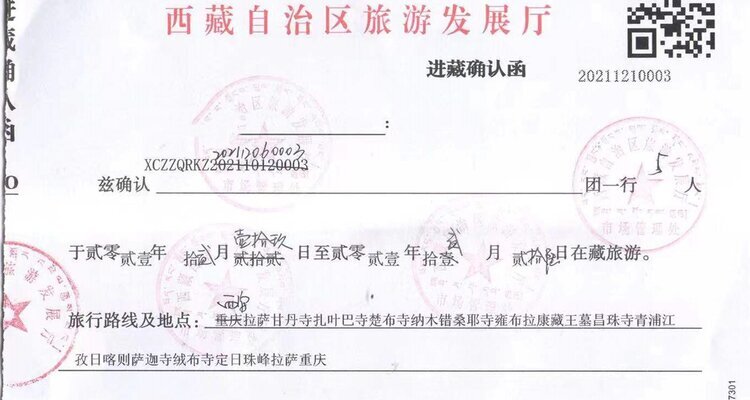 Tibet Travel Permit
We handle all the paperwork. Just send us a copy of your passport and Chinese visa, and we’ll take care of the rest. The process will need 5–7 working days, so we suggest sending all required documents to us at least 10 working days before your Tibet tour.
How to Get to Lhasa
Lhasa has no direct international flights (except Nepal), so it usually can not be your entry point into China unless you go from Nepal. You’ll need to fly into a major Chinese city like Beijing, Shanghai, or Chengdu first, then you can choose to reach Lhasa by flight, train, or car.
By Air – Most Convenient
Lhasa Gonggar International Airport is the only airport in Lhasa, which is about 1 hour from the city center. Major Chinese cities like Beijing, Xi’an, Chengdu, Chongqing, and Kunming have daily direct flights to Lhasa.
Chengdu is the most popular hub, with the most frequent departures and the shortest flight time (2½ hours). International flights to Chengdu are available from many cities, including Sydney and Melbourne in Australia, Rome in Italy, London in the United Kingdom, Los Angeles in the United States, Vancouver in Canada, etc.
There’s also one international route from Kathmandu, Nepal (2 hours).
Practical Example from the U.S.:
- Fly to Beijing or Chengdu (if direct flights are available from your city, Chengdu is a better first stop)
- Spend 2 to 3 days to recover from jet lag and explore
- Take a morning flight to Lhasa (2½–4½ hours), arriving early enough to rest and adjust to the altitude
Tip: Your guide cannot meet you inside the airport. After landing, you’ll need to walk out of the airport on your own to meet your guide outside.
By Train – Scenic but Challenging
There is only one railway that connects Lhasa to the other Chinese cities, the Qinghai–Tibet Railway. It is the longest, highest and most famous highland railway around the world.
If you want to experience the Qinghai–Tibet Railway, you can start from Beijing, Shanghai, Guangzhou, Xi’an, Chongqing, and Lanzhou, but the main hub is Xining. As the starting point, Xining has the most frequent trains and the shortest journey (about 21 hours). You’ll pass snow-capped mountains, grasslands, and dramatic high-altitude scenery.
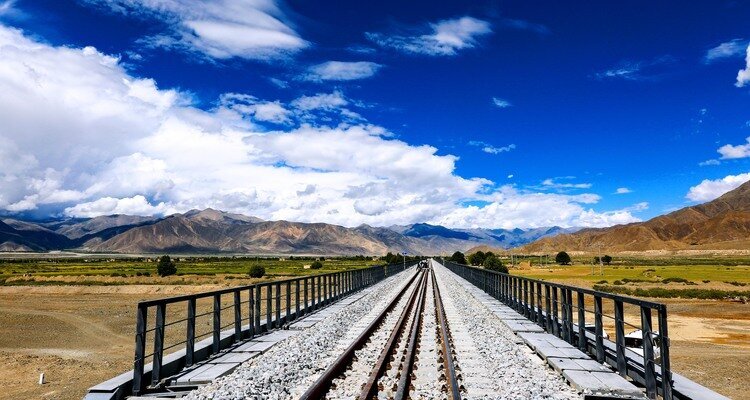 Scenery along the Qinghai–Tibet Railway
However, train travel has downsides. Journeys are long (20–40 hours), tickets are hard to get during peak season (June–August), and facilities are basic. Oxygen outlets are available, but cabins are often crowded. A soft sleeper (four berths per compartment) is the most comfortable option. If your group is smaller than four and you want privacy, we can try to book the entire compartment.
Check our 7-Day Tibet Tour by Train from Xining.
Tip: Flying into Lhasa is better for altitude adjustment. A good night’s sleep in a hotel helps your body adapt more effectively than a restless night on the train.
If scenic train journeys are part of your travel style and you don’t mind basic conditions, the Qinghai–Tibet Railway is an unforgettable experience.
By Road – For Adventurers
You can reach Lhasa overland via the Qinghai–Tibet Highway from Xining, the Sichuan–Tibet Highway from Chengdu, or the Yunnan–Tibet Highway from Shangri-La. These routes take several days, cover rough terrain, and pass through very high altitudes.
For experienced travelers seeking dramatic scenery and an adventure, we can arrange a safe and comfortable overland journey.
What to Do in Lhasa
Visit Tibet’s Most Magnificent Palace: Potala Palace
The Potala Palace offers the most visually stunning experience in Lhasa. The sheer scale and beauty will leave you in awe.
The palace is dramatically built on the mountain, with its white and red walls and golden rooftops forming a distinct construction. You’ll climb about 300 steps to enter the palace, so we don’t suggest visiting it on your first two days in Lhasa.
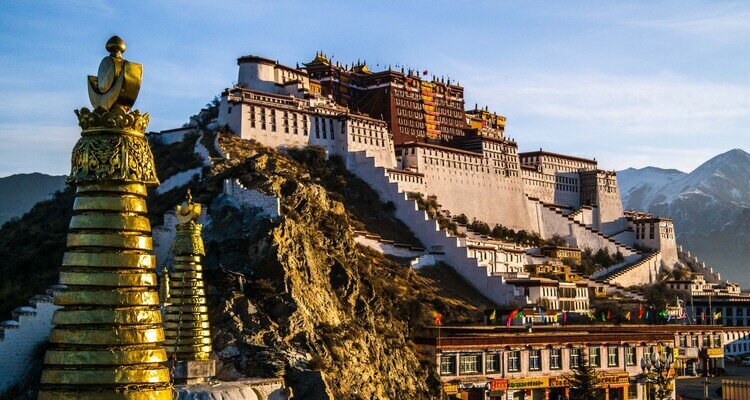 Potala Palace on the Red Hill
A standard visit usually takes 1–2 hours, but we strongly recommend allowing 3–4 hours for an in-depth experience. The palace is vast and historically rich, offering deep insights into Tibet’s political, religious, and cultural past. Our private guide will accompany you throughout the visit, providing detailed explanations rather than a rushed walk-through.
Morning entry before 12:00 PM is ideal. Tickets are limited and can only be booked through an official WeChat mini-program, with fixed entry time slots. We will handle the ticket reservation for you and aim to secure the earliest possible entry time.
You cannot take photos inside, but Potala Palace Square is the perfect spot to capture the palace’s grandeur—whether as a panoramic shot or as a backdrop for your own photos. See our 4-Day Lhasa Highlights Private Tour.
Witness Devoted Pilgrims at Jokhang Temple and Barkhor Street
Jokhang Temple is the spiritual heart of Tibet. This is the best place to see Tibetan Buddhism in action. You’ll see pilgrims prostrating, spinning prayer wheels, and circling the temple in devotion.
Beyond observing the devotion outside, you can spend about one to two hours inside the Jokhang Temple itself. With a local guide, the visit becomes much more than a walk-through. You’ll understand why Jokhang came before the city, and how “first Jokhang, then Lhasa” is not a saying but a lived reality. The stories behind the statues and chapels will make your visit much more profound.
After visiting the Jokhang Temple, when you step back out onto Barkhor Street, the contrast is striking. Pilgrims continue their clockwise circuit in deep concentration, while just steps away, cafés, small shops, and travelers fill the street with everyday life.
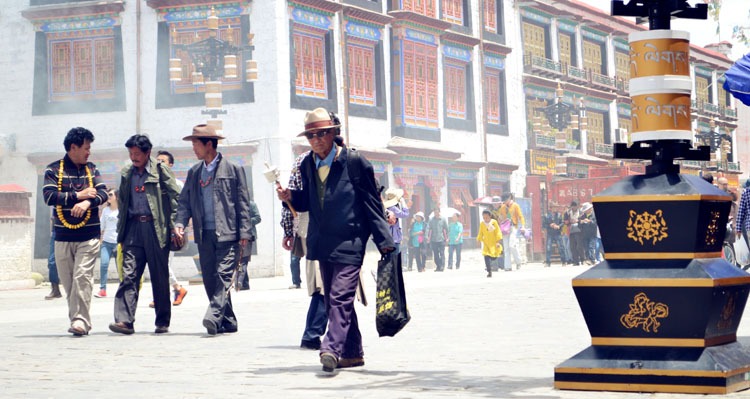 Tibetans in Barkhor Street
This is a good place to slow down and wander. Try a warming stone pot chicken, taste fresh yak yogurt, or pick up Minzhulin Tibetan incense as locals do. Walking the Barkhor is not just sightseeing. It’s a glimpse into how faith and daily life coexist in Lhasa.
Watch Monk Debates at Sera Monastery
At Sera Monastery, you can witness the largest-scale monk debates in all of Tibet. They are theatrical, energetic, and surprisingly entertaining. Even if you don’t understand a word of Tibetan, you can still tell how the debate is going by reading body language.
Debates happen everyday in afternoon from 3:00 to 5:00 PM (not on Sundays or major holidays). We suggest arriving one hour earlier to get a good spot in the debating courtyard.
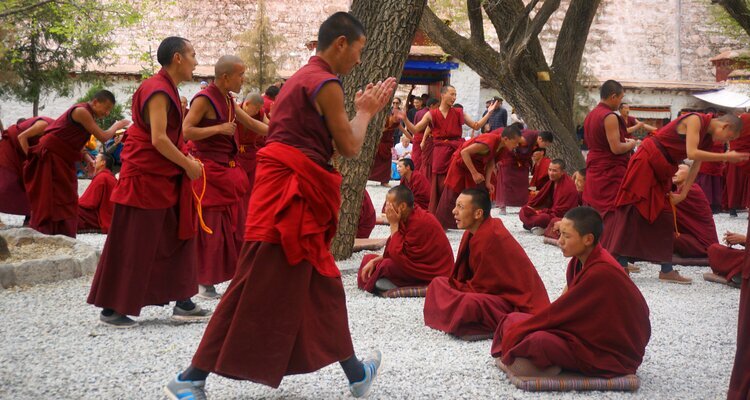 Monks wearing crimson robes are engaged in a debate
Beyond the debates, Sera itself is worth exploring at a relaxed pace. Give yourself another 30 minutes to an hour to wander through the monastery grounds before the debates start. You’ll often see small groups of monks in deep red robes walking beneath whitewashed walls, the contrast striking and deeply photogenic.
Know More about the Gelug School at Drepung Monastery
Drepung Monastery is the highest-ranking monastery within the Gelug school of Tibetan Buddhism. More than a scenic complex, it functioned as the intellectual and administrative heart of the Gelug tradition.
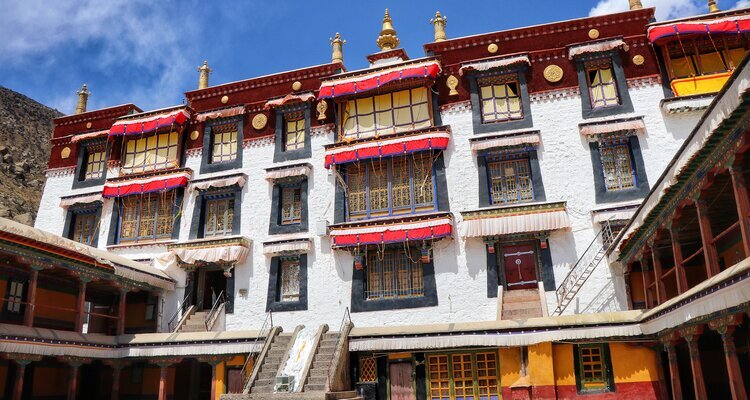 Drepung Monastery
Inside the main halls, you may see monks chanting during daily rituals, sacred stupas housing relics, and the historic Ganden Phodrang, once Tibet’s political center before the Potala Palace. Together, these spaces show how the Gelug school operated as a complete system of learning, practice, and authority.
Drepung also reflects the scholarly side of the Gelug tradition. You can visit its traditional scripture shop, where Tibetan texts printed on handmade paper are sold, and choose a scripture as a meaningful souvenir.
It’s especially recommended if you’re visiting in August because of the giant thangka unveiling. Thousands of locals and visitors gather at dawn to watch monks unfurl a 30-meter Buddha tapestry down the mountainside. It’s a breathtaking grand ritual for the Shoton Festival, usually in late August (dates vary by Tibetan calendar).
Noted that Drepung Monastery has many more stairs than other temples and requires plenty of walking. If you’re particularly interested in this temple and wish to explore it in depth, we recommend planning half a day to a full day for your visit. Our itinerary is flexible and can be adjusted at any time to suit your preferences.
Take a Scenic Day Trip to Yamdrok Lake
Yamdrok Lake is one of Tibet’s most stunning landscapes, and it’s also one of the closest to Lhasa. On clear days, you will see the water shift from deep blue to bright green with the sunlight, framed by snow-capped peaks and rolling hills.
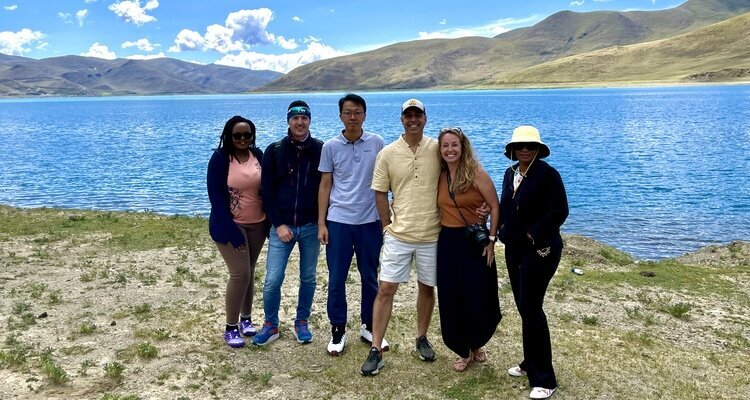 Our guests are visiting Yamdrok Lake
The drive takes about 3 hours from Lhasa, and you’ll cross a 4,750-meter mountain pass, which is one of the best viewing platforms. Besides viewing the scenery, you can enjoy a peaceful picnic by the shore, take a lakeside walk, or interact with local animals—pay a small fee to hold a lamb or ride a yak. You’ll need a full day to visit the lake, but it will be a wonderful experience. Know more in our Yamdrok Lake Travel Guide.
Experience Local Life at Tea Houses
If you want to experience an authentic slice of Lhasa life, we suggest visiting Guangming Gangqiong Sweet Tea House near Barkhor Street. This is where locals gather to chat, laugh, and drink endless cups of Tibetan sweet tea.
You can sit down leisurely with locals because there are usually not many empty seats. Ask for one cup of sweet tea, and when you want a refill, just place a 1-yuan note under your cup, and wait. A server will come by, take the note away, and pour your tea. Just remember to bring some cash in Chinese yuan!
You’ll sit elbow-to-elbow with Tibetans of all ages, sharing snacks and stories. It’s informal, lively, and one of the most genuine interactions you’ll have in Lhasa.
When Is the Best Time to Visit Lhasa?
Our top recommendations are Spring (April to June) and Autumn (September to November). Lhasa is ideal for visiting all year round, but the experiences vary depending on the different periods.
Best Time: April to June (2–22℃ / 36–72℉) and September to November (-2–20℃ / 28–68℉)
These are the ideal months for visiting Lhasa. The weather is clear and stable, with comfortable daytime temperatures and minimal rainfall. The conditions are excellent for outdoor activities and photography, with crisp air and brilliant blue skies. Additionally, these are the shoulder seasons, allowing you to avoid the crowds and enjoy the scenery freely.
Winter: December to March (-8–10℃ / 18–50℉)
Winter is also a good time to visit Lhasa. Winter in Lhasa is sunnier than you might expect. The city is called the “City of Sunshine” for a reason, with over 8 hours of sunlight daily even in winter. Daytime temperatures hover around 7–9°C, and the dry air makes it feel warmer than the numbers suggest. Just keep in mind that it can get quite cold in the mornings and evenings.
This is the quietest season, with fewer tourists and lower prices on flights and hotels. Many attractions offer discounted tickets.
However, it’s important to note that during the Tibetan New Year, usually from mid-February to early March, Tibet is closed to visitors, and the Tibet Travel Permits are generally not issued during this period. If you plan a winter trip, contact us and we can help you avoid these dates.
Peak Season: July–August (13–23℃ / 55–73℉)
Summer is Lhasa’s busiest season. This is when Chinese visitors travel during summer vacation, so book flights and hotels well in advance to avoid high prices and limited availability.
The weather is warm (daytime temperatures around 23–25℃/ 73-77℉), very comfortable for sightseeing. Evenings can be cool, so bring a warm layer.
However, July and August are the rainy season in Tibet. But in Lhasa, rain typically falls in the evening or at night, so the daytime sightseeing is usually unaffected.
How Many Days Should I Spend in Lhasa?
4–5 days is the ideal length for most first-time visitors. It gives you time to adjust to the altitude (spend the first 1–2 days resting and doing light activities), visit the core sights—Potala Palace, Jokhang Temple, Sera Monastery—and take a day trip to Yamdrok Lake. See our 5-Day Lhasa Classics and Lake Yamdrok Tour.
If you’re short on time, 3 days can also cover the essentials: one day for altitude adjustment, one day for Potala Palace and Jokhang Temple, and one day for Sera Monastery.
If you want a more relaxing trip in Lhasa, you can also extend to 6–7 days. With more time, you can add Namtso Lake, or just visit at your own pace. This pace lets you experience more of Lhasa.
Just remember: Avoid intense activities during your first two days to help your body adjust to the altitude.
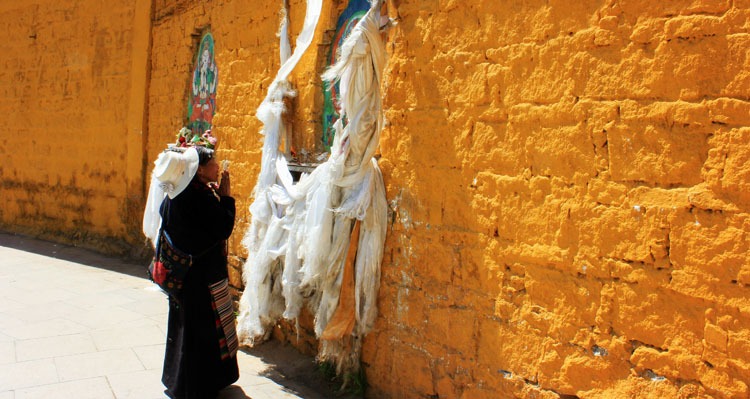 Tibetan People is Praying
Where to Stay in Lhasa
Lhasa has the best accommodation options in Tibet, from five-star hotels to boutique guesthouses. Choose based on your priorities: for Potala Palace views, or for lively atmosphere. All our recommended hotels are certified to host foreign guests and provide oxygen supply in rooms if needed.
For Potala Palace Views
There are a lot of hotels that offer views of the Potala Palace. After carefully considering location, comfort, and viewing experience, we recommend these hotels.
Recommended hotels:
- St. Regis Lhasa Resort (5-star): The most luxurious option, prime location, impeccable service, Potala views
- Shangri-La Hotel Lhasa (5-star): Modern luxury with Tibetan touches, 24-hour oxygen bar, Potala views, peaceful setting
- Tibethostel Scenic Hotel (4-star): Comfortable rooms and facilities, good value, Potala views
- Songtsam Lhasa Linka (4-star): Stunning Potala views, boutique Tibetan style, slightly outside the center
For Lively Local Atmosphere
Most hotels near the Barkhor Street are Tibetan-style boutique hotels. You can stay here for culture and convenience. You’re within walking distance of Jokhang Temple, Barkhor Street’s markets and restaurants, and the heart of old Lhasa. The area is lively and atmospheric.
Recommended hotels:
- Thangka Hotel (4-star): Good value, Tibetan-style décor, central location
- House of Shambhala (3-star): Old Tibetan architecture, rooftop restaurant with views (note: no elevator)
Is the Risk of Altitude Sickness High in Lhasa?
The risk is relatively low, but mild symptoms are still very common.
Lhasa is the safest place in Tibet for first-time visitors to start their journey. Almost everyone feels something after arrival, but for most people, it’s mild and goes away after proper rest and acclimatization.
Lhasa sits at 3,650 meters (11,975 feet). This is high enough to trigger altitude reactions, but it’s still much lower than places like Everest Base Camp, Namtso, or Mount Kailash. That’s exactly why nearly all Tibet itineraries start here. It gives your body time to adapt before you go higher.
For your first 1–2 days, take it slow. Avoid heavy exercise, long showers, or washing your hair. Drink plenty of water, keep warm (especially your head), and rest as much as possible. Most hotels provide oxygen bottles, and our guides also carry portable oxygen during the tour in case you need it.
Visit Lhasa with Us
When you travel with us, we handle all the details—Tibet Travel Permit application, hotel bookings, private transportation, and an experienced local guide who brings Tibet’s culture to life.
Our private tours are flexible and tailored to your pace. Want to spend more time at a monastery? Prefer a longer lunch break? We adjust the itinerary to suit you.
Ready to explore Lhasa? Contact us to start planning your personalized Tibet journey, or see our recommended itineraries:

Leave a Reply
You must be logged in to post a comment.