Ngari Travel Guide: Best Route, What to Do & Travel Tips
Ngari Travel Guide: Best Route, What to Do & Travel Tips
Located in the far western corner of Tibet at over 4,500 meters, Ngari is home to Mount Kailash—Asia’s most sacred mountain—and Lake Manasarovar.
This is Tibet’s ultimate destination for travelers seeking profound spiritual experiences and untouched wilderness, but it’s also one of the most challenging journeys you can undertake. Expect long drives across remote plateaus, basic accommodations, and extreme altitude.
All foreign travelers must travel with a licensed guide, and most visitors need 13–16 days, including travel from Lhasa.
Content Preview
- How to Get to /around Ngari
- What to Do in Ngari
- How Many Days to Spend in Ngari
- When to Visit Ngari
- Where to Stay in Ngari
- Preparation Before Traveling to Ngari
How to Get to /around Ngari: Guided Tours Required
All foreign travelers need to book through a licensed Tibet tour operator, independent travel is not allowed in Ngari. We can handle logistics, help with altitude issues, and share cultural insights that will greatly improve your experiences.
Starting Point: Lhasa
Most Ngari journeys begin in Lhasa. You could fly into Lhasa Gonggar Airport (LXA) from major Chinese cities like Beijing, Chengdu, or Shanghai. We recommend spending at least 2-3 nights in Lhasa before heading west. This acclimatization time is crucial for your trip.
From Lhasa, you’ll travel overland via the G318 and G219 highways. The 1,456-kilometer journey to Mount Kailash takes 3-4 days with stops in Gyantse, Shigatse, and Saga. This gradual ascent is the safest way to approach Ngari’s extreme altitudes, and you’ll see incredible landscapes along the way.
Alternative: Flying to Ngari Purang Airport
Ngari has its own airports (Ngari Gunsa Airport and Ngari Purang Airport), and they have direct flights from Lhasa, Kashgar, and Ürümqi. But we don’t suggest flying directly from outside Tibet to Ngari, as its high altitude without acclimatization will lead to severe altitude sickness.
If you’re tight on schedule and want to fly to Ngari, we suggest staying in Lhasa for 3-4 days first, and then flying from Lhasa after your body has acclimatised to the high altitude.
If you want to visit Mount Kailash, it’s better to fly into Ngari Purang Airport (APJ), as it’s only 1.5 hours by car to Darchen (塔钦), the base town for Mount Kailash.
What to Do in Ngari
Ngari is all about raw landscapes and untouched nature, and you’ll feel that the moment you arrive. Much of the region remains undeveloped, offering scenes that feel vast and quiet. Traveling here is less about ticking off attractions and more about slowing down, taking in the scale of the land, and letting the scenery speak for itself.
Below are the highlights we recommend when exploring Ngari.
The Sacred Heart: Mount Kailash
Mount Kailash (6,638m) is the most sacred mountain in Asia and is regarded as the center of the universe for Buddhists, Hindus, Jains, and Bon believers. The 52-kilometer kora (circumambulation) around the mountain is considered one of the world’s great pilgrimages.
You can walk this ancient pilgrimage route alongside Tibetan pilgrims performing full-body prostrations, chanting mantras, and travelers from around the world. It’s a challenging journey that purifies your heart. You can see our Mount Kailash Yatra Guide for more details.
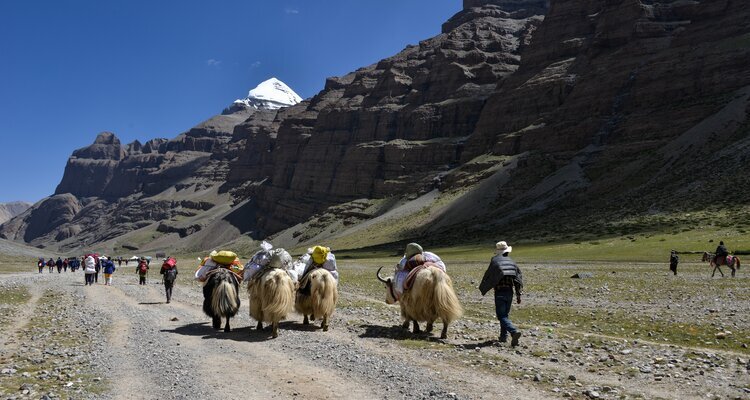 Mt. Kailash kora
If you do not want to hike, viewing Mount Kailash from Darchen and nearby viewpoints still offers a powerful sense of its spiritual presence.
Mysterious Twin Lakes: Lake Manasarovar and Rakshastal
Just 20 kilometers south of Mount Kailash, Lake Manasarovar sits at 4,590 meters and is one of the world’s highest freshwater lakes. Sacred to multiple religions, it is believed to have been created by Brahma and blessed by Buddha.
When you stand by the shore, the first thing you notice will be the color. Lake Manasarovar is known for its sapphire-blue waters reflecting the snow peaks of Mount Kailash. With its crystal clarity and high-altitude purity, you’ll find an awe-inspiring contrast of the lake and the stark Tibetan plateau. You can visit the Chiu Monastery on the northwestern shore for the panoramic view of the lake.
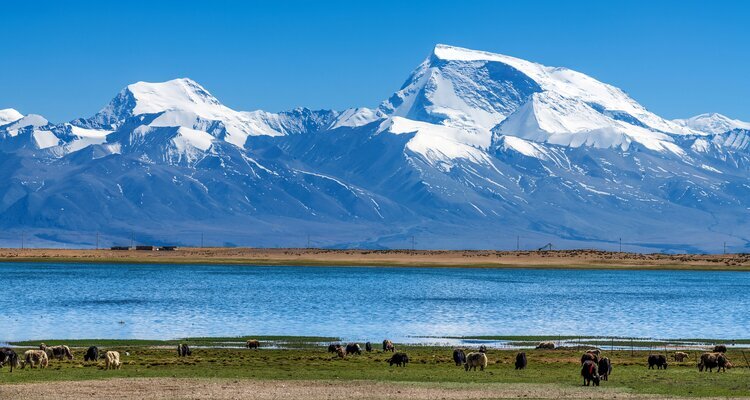 Lake Manasarovar
Although there is a 90-kilometer kora around the lake that takes pilgrims 4–5 days, we only suggest a shorter visit of 1-2 hours, which is enough to experience its beauty.
Directly across the road from Lake Manasarovar lies Lake Rakshastal, known as the “Ghost Lake”. Seeing the two lakes side by side will make you feel the striking contrast. Manasarovar feels alive and serene, while Rakshastal is dark, barren, and silent.
With no plants or livestock around, the barren shores of Lake Rakshastal feel lifeless and eerie. Standing here and seeing its deep-blue waters and vast emptiness, you may feel small, as if you’ve reached the edge of the planet.
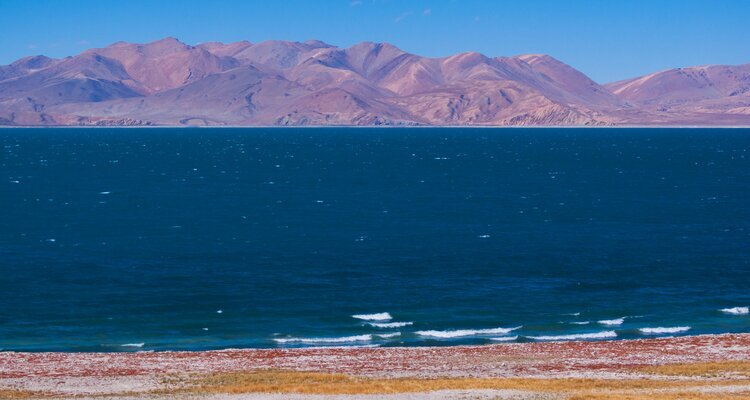 Lake Rakshastal
 Ancient Mysteries: Guge Kingdom Ruins
Hidden deep in the Zanda region, the Guge Kingdom ruins are the remains of a once-flourishing civilization that disappeared in the 17th century. The ruins are carved directly into cliffs of earth and rock, with more than 1,400 cave dwellings, temples, stupas, and tunnels scattered across the eroded landscape.
As you walk through the site, it’s hard to tell where the ruins end and the land begins. What survives feels fragile and solemn against the vast Zanda badlands.
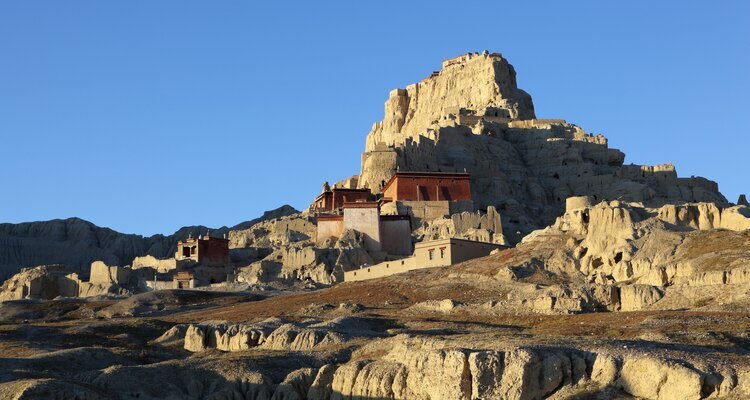 Guge Kingdom Ruins
The murals and sculptures inside the temples are the true highlight. Many remain remarkably well preserved, especially those in the six main halls.
The so-called “burial cave” will leave you a strong impression. Containing human remains and unanswered questions about Guge’s final days, adds an unsettling layer to the visit.
Plan 2–3 hours here. The climb to the upper levels is steep, but once you reach the top, the view over the valley makes the effort feel worthwhile.
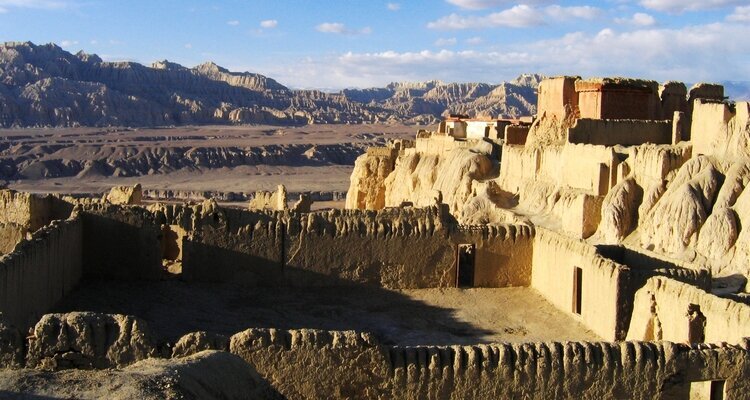 View at the top of Guge Kingdom Ruins
Surreal Landscapes: Zanda Earth Forest
The Zanda Earth Forest is one of the most striking landscapes you can find in Ngari. This vast area of eroded clay formations rises from the valley floor in the shape of towers, spires, and castle-like walls, formed over millions of years by wind and water. When you first see it, the landscape feels unreal, almost like another planet.
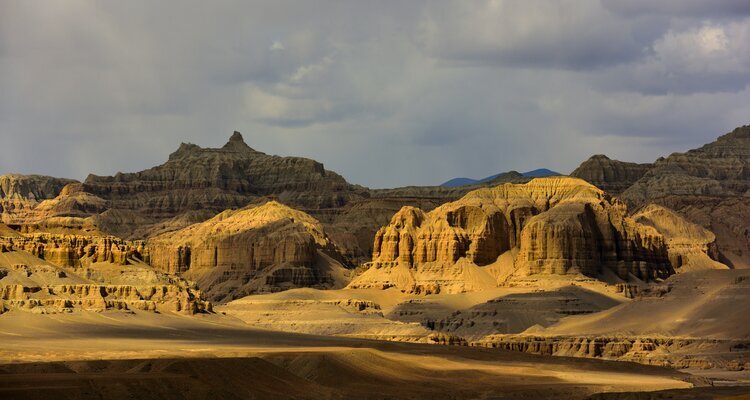 Zanda Earth Forest
We recommend visiting at sunrise or sunset. As the light changes, you can watch the colors shift from gold to orange to deep red right in front of you. Plan at least an hour to walk, explore, and photograph the area.
How Many Days to Spend in Ngari
Ngari is not a destination you can rush. The distances are vast, the roads are slow, and your body needs time to adjust to the extreme altitude. For most travelers, 13–16 days is the ideal timeframe at a comfortable pace, including travel time from Lhasa and back.
If you’re short on time, a 7-day express itinerary focusing only on Mount Kailash (no hiking) and Lake Manasarovar is possible, and you’ll spend most of your time in vehicles. We recommend this option only when time is very limited.
Recommended Itinerary: 14-Day Lhasa to Mount Kailash Tour
This itinerary follows our classic route from Lhasa to Mount Kailash and back, covering all of Ngari’s highlights while allowing for proper acclimatization.
Day 1: Arrive Lhasa — Airport/train station pickup, rest and acclimatize (3,650m)
Day 2: Lhasa — Potala Palace, Jokhang Temple, Barkhor Street
Day 3: Lhasa to Shigatse — Yamdrok Lake, Karola Glacier, Pelkor Chode Monastery (6–7 hours driving)
Day 4: Shigatse to Saga — Drive west through plateau landscapes (7–8 hours driving)
Day 5: Saga to Darchen — Lake Manasarovar, Lake Rakshastal, first views of Mt. Kailash (7–8 hours driving)
Days 6–8: Mount Kailash Kora (3 days) — 52km trek: Darchen → Dirapuk (Day 6, 13km) → Zutulpuk via Dolma La Pass (Day 7, 18km) → back to Darchen (Day 8, 7km)
Day 9: Darchen to Zanda — Zanda Earth Forest, Tholing Monastery, Guge Kingdom Ruins sunset (4–5 hours driving)
Day 10: Zanda to Paryang — Return journey east, wildlife viewing (8–9 hours driving)
Day 11: Paryang to Saga — Stop at Lhatse for a traditional Tibetan knife workshop (7–8 hours driving)
Day 12: Saga to Shigatse — Sakya Monastery, Tashilhunpo Monastery (6–7 hours driving)
Day 13: Shigatse to Lhasa — Tibetan incense making experience (6–7 hours driving)
Day 14: Depart Lhasa
This itinerary includes two full days in Lhasa for acclimatization before heading to higher altitudes, and positions the three-day kora after you’ve spent several days above 4,500 meters. For more details, check our 14-Day Tibet Tour with Mt. Kailash and Lake Manasarovar.
When to Visit Ngari
Generally, the good time to visit Ngari is from April to October, with April–June and September–October being the most recommended periods. July and August are also possible, but conditions for trekking, especially the Mount Kailash kora, are less ideal due to the rainy season.
Best Time: April to June & September to October
These periods offer the best combination of stable weather, clear skies, and comfortable temperatures for trekking.
April–June (Spring): -7℃ to 19℃/ 19℉ to 66℉
Dry weather and clear skies make this the best season for trekking. April may still have snow on some roads.
May is peak time for the Mount Kailash kora during the Saga Dawa Festival, so expect large crowds and book early.
September–October (Autumn): 3℃ to 17℃ / 37℉ to 63℉
After the monsoon, the skies turn crystal clear and visibility is at its best. Stable weather makes this an excellent time for photography and trekking. Temperatures drop quickly in October, so warm layers are essential.
Less Recommended: July–August (Summer, 8℃ to 24℃ / 46℉ to 75℉)
July and August are the rainy season in Tibet. Although Ngari remains relatively dry compared to eastern Tibet, you may encounter muddy road sections and occasional afternoon showers.
This period also sees a surge in domestic travelers, making major sites more crowded.
Avoid: November to March (Winter)
Winter in Ngari is extremely harsh. Daytime temperatures usually hover around 0–4℃ (32–39℉), while nights can plunge to –20℃ (–4℉) or even as low as –35℃ (–31℉) during cold spells. Heavy snowfall closes mountain passes, most services shut down, and the risk of severe altitude sickness increases in extreme cold. Travel is not recommended during these months.
Where to Stay in Ngari
Accommodation in Ngari is very basic and quite different from what most travelers experience elsewhere in Tibet. It’s important to adjust expectations before arriving.
This is one of the most remote parts of Tibet, with limited infrastructure and few hotel choices. Comfort is secondary to altitude, distance, and route planning, so expectations should be adjusted in advance.
Below, we outline where you will stay along the route and what to expect in each area. On our private tours, we select the best available hotels along the route, prioritize cleanliness, heating, and oxygen support where possible.
Darchen – Base Town for Mount Kailash and Lake Manasarovar
Darchen is the main base town for Mount Kailash and offers one of the best accommodation conditions in the Ngari region. However, most hotels here are still simple by urban standards.
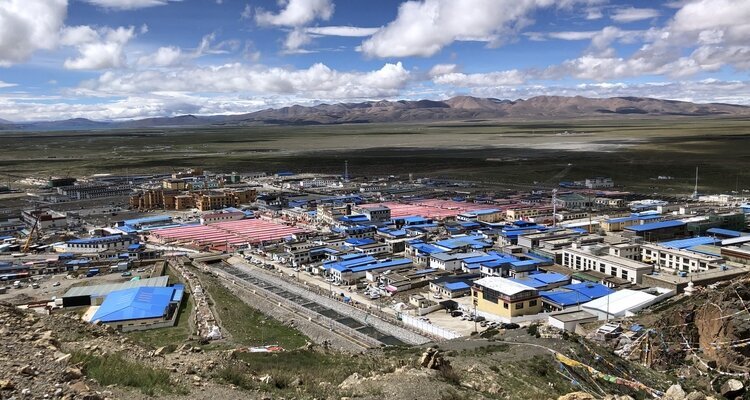 Darchen Town
We recommend the Kailash Chengbao Hotel in Darchen. It stands out for its modern facilities, including oxygen supply, underfloor heating, hot showers, private bathrooms, smart toilets, and humidifiers. Clean and well-maintained, it comes closest to a four-star hotel standard in more developed areas.
During peak kora season, rooms sell out quickly. We suggest booking at least two months in advance.
Dirapuk & Zutulpuk Monastery – During the Kailash Kora
Accommodation during the Mount Kailash kora is extremely basic. You will stay in monastery guesthouses at Dirapuk and Zutulpuk, usually in shared dorm-style rooms with dirty pit toilets.
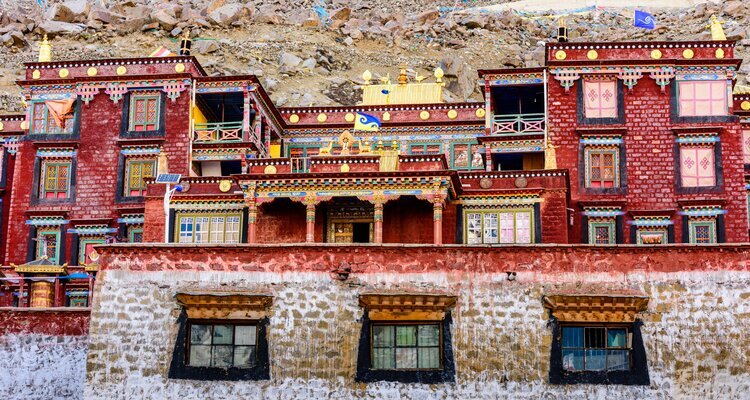 Dirapuk Monastery
There is no heating, and nights can be very cold. Conditions are simple, but staying along the route is part of the pilgrimage experience. We strongly recommend bringing wet wipes, your own sleeping bag, or disposable personal items.
Beds are limited and often oversubscribed. When traveling with us, all accommodation logistics are arranged in advance, so you can focus fully on the kora.
Zanda County – For Guge Kingdom & Earth Forest
Zanda County serves as the base for visiting the Guge Kingdom ruins and the Zanda Earth Forest. It’s also the county with the smallest population in China. Accommodation here is slightly better than in most of Ngari, with a few reliable local hotels.
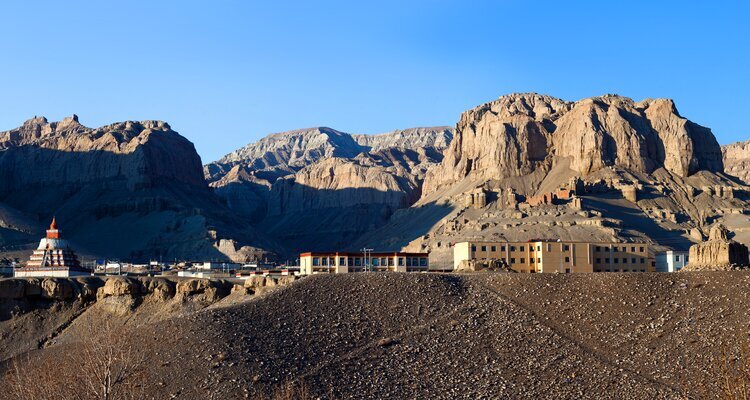 Zanda County
We recommend Ganggadisi Hotel, the best option in town, offering underfloor heating, oxygen supply, private showers, and hot water. Comfort is comparable to a standard three-star hotel in more developed regions.
Preparation Before Traveling to Ngari
Traveling to Ngari requires more preparation than most destinations. Here’s what you need to know to ensure a safe and successful journey.
Permits Required
Traveling to Ngari requires several permits, all of which we handle for you. You just need to provide your passport and Chinese visa at least 30 days before departure.
These permits include the Tibet Travel Permit, Alien’s Travel Permit for restricted regions outside Lhasa, and Military Permit (needed for Mount Kailash, Lake Manasarovar, and border areas).
All these will be processed in advance and arranged by us, so you don’t need to worried about the complex paperwork. You can also see our Tibet Travel Permit Guide for more information.
Altitude Sickness: What You Need to Know
Altitude sickness is the single biggest challenge of traveling in Ngari. The region’s average elevation exceeds 4,500 meters, and you’ll spend days at altitudes where the air contains 40% less oxygen than at sea level.
Symptoms to watch for:
- Headache, dizziness, and fatigue (mild symptoms, very common)
- Nausea, loss of appetite, and difficulty sleeping (moderate symptoms)
- Severe headache, vomiting, confusion, and shortness of breath at rest (severe symptoms—seek medical help immediately)
If symptoms become severe—especially confusion, inability to walk straight, or fluid in the lungs (indicated by a crackling sound when breathing)—immediate descent to a lower altitude is essential.
How to minimize the risk
1. Acclimatize gradually: Spend at least 3–4 days in Lhasa (3,650m) before traveling to Ngari. The overland route we recommend allows your body to adjust slowly as you gain altitude.
2. Stay hydrated: Drink 3–4 liters of water per day. Dehydration makes altitude sickness worse.
3. Avoid alcohol and sleeping pills: Both suppress breathing and can worsen symptoms.
4. Eat light meals: Your body digests food more slowly at high altitude. Stick to carbohydrates and avoid heavy, fatty foods.
5. Avoid showering during your first two days on the plateau: Showering will accelerate blood circulation and increase oxygen consumption. Sudden temperature changes can stress your body while it is still adjusting to the altitude.
6. Prioritize good sleep: Proper rest at night helps your body adapt and can greatly reduce the risk of altitude sickness.
7. Move slowly: Avoid rushing, running, or any strenuous activity during your first few days at high altitude. On the kora, walk at a steady, comfortable pace.
8. Medication: Many travelers take Diamox (acetazolamide) to prevent altitude sickness. Starting 1–2 days before you ascend to high altitude and continuing for 2–3 days after arrival. Better consult your doctor before your trip.
9. Oxygen supply: Our vehicles carry portable oxygen for emergencies, and oxygen is available at most hotels in Tibet. Don’t hesitate to use it if you’re struggling.
What to Pack
Packing for Ngari means balancing warmth, weight, and practicality. Layering is key: thermal base layers, fleece mid-layers, and a down jacket for evenings, plus a waterproof, windproof outer shell, hat, gloves, and neck gaiter.
Sturdy, broken-in hiking boots with ankle support and comfortable trekking pants are essential. Trekking poles help on rocky trails, especially on Dolma La Pass descents.
Bring a 30–40L daypack, 3L water bottle or hydration bladder, headlamp, and sleeping bag or disposable bedding for monastery guesthouses. Pack wet wipes, hand sanitizer, toilet paper, toiletries, and a power bank. Don’t forget High-SPF sunscreen, lip balm, and moisturising cream.
Bring personal medications, a basic first-aid kit, and consult your doctor before the trip. Optional: portable oxygen and energy snacks for the trek.
Travel to Ngari with Us
Ngari is a once-in-a-lifetime destination that rewards those willing to embrace its challenges. If you’re ready to stand at the foot of Mount Kailash, walk in the footsteps of pilgrims, and experience Tibet at its most raw and beautiful, we’re here to make it happen.
Our private Ngari tours are designed for travelers who want the freedom and flexibility of a personalized itinerary, combined with the safety and expertise of professional guides. We will tailor every detail to match your pace, interests, and fitness level.
Recommended tours:
- 8-Day Tibet Tour including Tsedang, Shigatse, and Lhasa
- 3-Week Must-See Places China Tour Including Holy Tibet

Leave a Reply
You must be logged in to post a comment.