If you are in China this summer, the weather has probably been one of the most popular topics (and reasons to complain!) in conversations with your Chinese colleagues and friends.
This week, let’s learn 8 Temperature Adjectives in Chinese for describing hot and cold temperature, so you can join in on weather conversations and express your own experiences 🔥☀️
From Hot to Cold: 8 Temperature Adjectives in Chinese
01. Warm 🌤️
暖和 (nuǎnhuo) refers to warm and comfortable weather. You typically experience this kind of weather in spring and autumn when it’s neither too hot nor too cold.
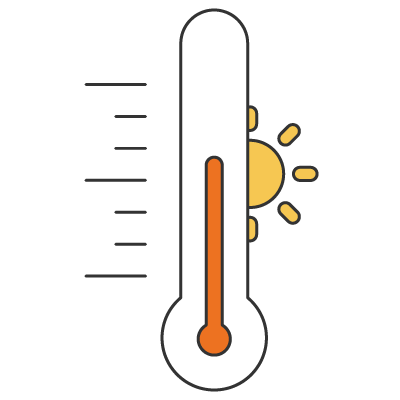
暖和
nuǎnhuo
warm; nice and warm
You can use this sentence to describe a pleasant and mild weather:
今天很暖和。
Jīntiān hěn nuǎnhuo.
The weather is warm today.
02. Hot
热 (rè) is the most common word that Chinese people use to express “hot”.

热
rè
hot
NOTE
This word is versatile because it can describe not only the weather, but also food and drinks, and even personal feelings. Here are a few examples:
今天天气很热。
Jīntiān tiānqì hěn rè.
The weather is hot today.
我要一杯热咖啡。
Wǒ yào yì bēi rè kāfēi.
I’d like a cup of hot coffee.
我觉得很热。
Wǒ juéde hěn rè.
I’m feeling hot.
03. Scorching
In Chinese, 炎热 (yánrè) can only be used to describe the weather, and its degree of “hotness” is higher than that of 热 (rè).

炎热
yánrè
scorching
NOTE
In summer, the temperature in some parts of China (especially in the south) could reach 40 degrees, and 炎热 (yánrè) is exactly the word you need to describe this kind of scorching weather 🥵
今年的夏天异常炎热!
Jīnnián de xiàtiān yìcháng yánrè!
The summer was unusually hot this year!
04. Hot and Stuffy
During the summer season, the weather is often very humid in China, and combined with the high temperature, it sometimes makes people feel quite sultry.
The character 闷 (mēn) means “stuffy”, which can be used to describe a room that hasn’t been ventilated in a while.
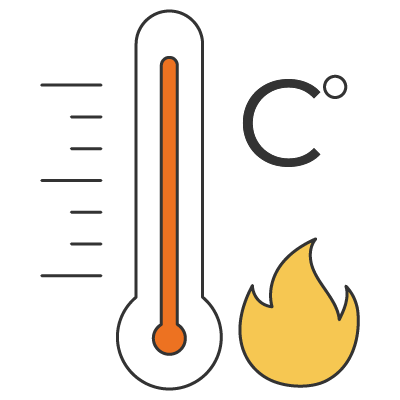
闷热
mēnrè
hot and stuffy
If you dislike hot and stuffy weather, you can express it to your Chinese friends by saying:
我不喜欢闷热的天气
Wǒ bù xǐhuan mēnrè de tiānqì.
I don’t like hot and stuffy weather.
05. Cool and Pleasant
For pleasantly cool temperature, which you can feel in mid-autumn, Chinese people often use the word 凉快 (liángkuai).
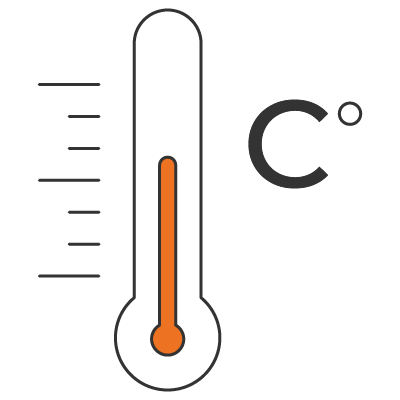
凉快
liángkuai
pleasantly cool
NOTE
After a heavy rain, the air turns cool and pleasant. Here’s how to say it in Chinese:
一场大雨过后,天气凉快下来了。
Yì chăng dà yǔ guòhòu, tiānqì liángkuai xiàlái le.
It cooled off after the downpour.
06. Cold
Now, let’s explore the word that describes “cold”.
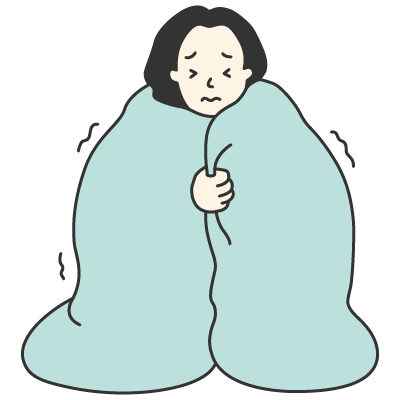
冷
lěng
cold
NOTE
Similar to 热 (rè), 冷 (lěng) can be used to describe the weather, food and one’s personal feeling. For example:
北京冬天很冷。
Běijīng dōngtiān hěn lěng.
In Beijing, it’s cold in winter.
我点了两个冷菜。
Wǒ diǎn le liǎng gè lěng cài.
I ordered two cold dishes.
我的手很冷。
Wǒ de shǒu hěn lěng.
My hands are feeling cold.
07. Ice/Iced
When it comes to cold drinks, Chinese people usually use the next word, which is “冰 bīng”.
冰
bīng
ice/iced
NOTE
The noun ice (冰 bīng) is often used as an adjective meaning “cold” in Chinese people’s daily lives. Some of the typical drinks including the use of 冰 (bīng) are:
冰可乐
bīng kělè
cold coke
冰啤酒
bīng píjiǔ
cold beer
冰咖啡
bīng kāfēi
cold coffee
08. Freezing
In winter, 寒冷 (hánlěng) can be often heard in northern China, where the temperature could reach as low as -30 degrees.
寒冷
hánlěng
freezing cold
NOTE
If you visit northern regions during the winter, keep these phrases in mind to express how you feel about the weather:
这里极其寒冷。
Zhèlǐ jíqí hánlěng.
It’s extremely cold here.
我感到了刺骨的寒冷!
Wǒ gǎndào le cìgǔ de hánlěng!
I felt the biting cold!
lit. “I-felt-piercing to the bones-cold”
Learn More About Life in China
What type of the weather do you like most?
Leave your ideas in the comments below or on our WeChat Public Account.

Leave a Reply
You must be logged in to post a comment.