Chinese Handwriting Practice, One Stroke at A Time: A Comprehensive Guide
Chinese Handwriting Practice, One Stroke at A Time: A Comprehensive Guide
Being able to write by hand in English is a skill we often take for granted. It’s a fine motor skill requiring both dexterity and muscle memory that we’ve carefully fine-tuned over decades. Many native English speakers who take on the challenge of learning a new script, such as Chinese, find themselves frustrated by the fact that their handwriting is oversized, poorly balanced, and full of mistakes. But think back to when you were learning to write as a child, your handwriting in English was likely no better. The key to overcoming the obstacles of learning to write in Chinese is to follow the same process you used to learn to write in your native language, diligently studying the strokes and structure that make up each character, consistently practicing, and receiving feedback.
Learning the Chinese writing system is a massive undertaking, and achieving mastery can take years. For some, it may not seem like it’s worth the effort when typing exists as an easy alternative, but increased dexterity is not the only benefit of learning to write by hand. The process itself of learning to write characters is a tool that will increase your understanding of the Chinese language on both a linguistic and cultural level.
The thought of learning a new writing system may feel like looking up at Mt. Everest, but you’re not alone. This article will provide you with an introduction to the fundamentals of Chinese handwriting and calligraphy, as well as strategies to help you improve your handwriting at any level.
If you’re ready to start, let’s talk about why learning this part of the language is so necessary.
- Why Is the Chinese Writing System Important?
- Components of the Written Chinese Language
- Learning to Write Chinese by Hand: The Tools You’ll Need
- Chinese Writing Practice for Beginner, Intermediate, And Advanced Learners
- A Personal Note: Learning to write Chinese if you’re left-handed
- The common characters practice sheets (PDF)

Why Is the Chinese Writing System Important?
Chinese handwriting is more than just a practical system for conveying information, the form of the characters themselves and the meaning embedded in each component provides insight into Chinese culture, history, and values.
Aesthetically, Chinese characters follow a flow that mirrors nature, a key theme in Chinese culture. The meticulously planned stroke order guides the brush smoothly from one end of the page to the other.
Furthermore, the cultural significance isn’t confined to artistic expression. The visual nature of the language allows the writing system to encapsulate historical perspectives and events. For example, looking at ancient script, the ancestor of the modern Chinese writing system, will allow you to view the world through the lens of the people who first transcribed the world around them. You’ll see what they consider important, valuable, and beautiful.
Components of the Written Chinese Language
While many refer to Chinese as a pictographic script, only about 4% of characters are actually pictograms(象形字). The remaining 96% consist of simple ideographs(指事字), compound ideographs(会意字), phonetic semantic compounds(形声字), loanwords(假借字), and derivative characters(转注字)(The Details of The Main Types of Chinese Characters). What does this mean for you as a learner? It means that written Chinese is a diverse ecosystem, where many different elements come together to create complex meanings and ideas. To gain a comprehensive understanding of the written language, you must first understand its basic components.
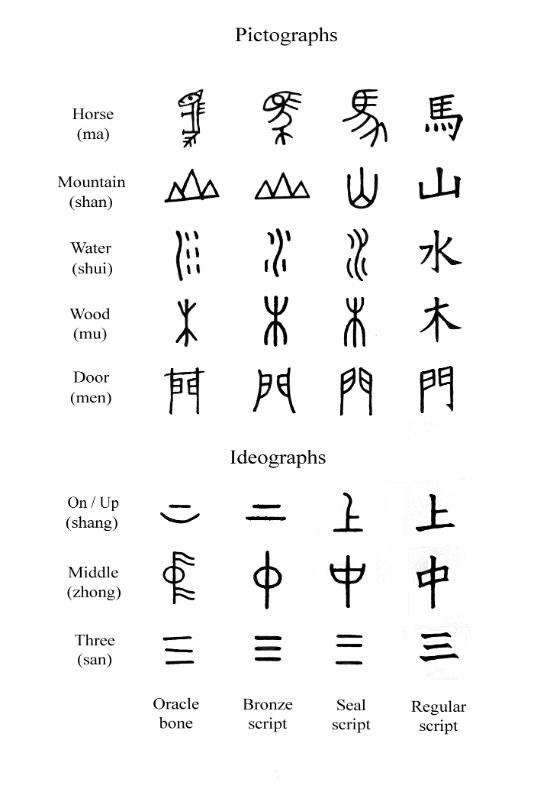
Developing an advanced understanding may seem daunting, but it takes time. There are many much smaller and much simpler steps you can take to put yourself on the right track. For example, while pictograms only make up a small number of characters in total, they constitute a significant portion of the characters beginners should learn first. From there, you can grow your vocabulary and build your understanding of the written language progressively.
Learning to Write Chinese by Hand: The Tools You’ll Need
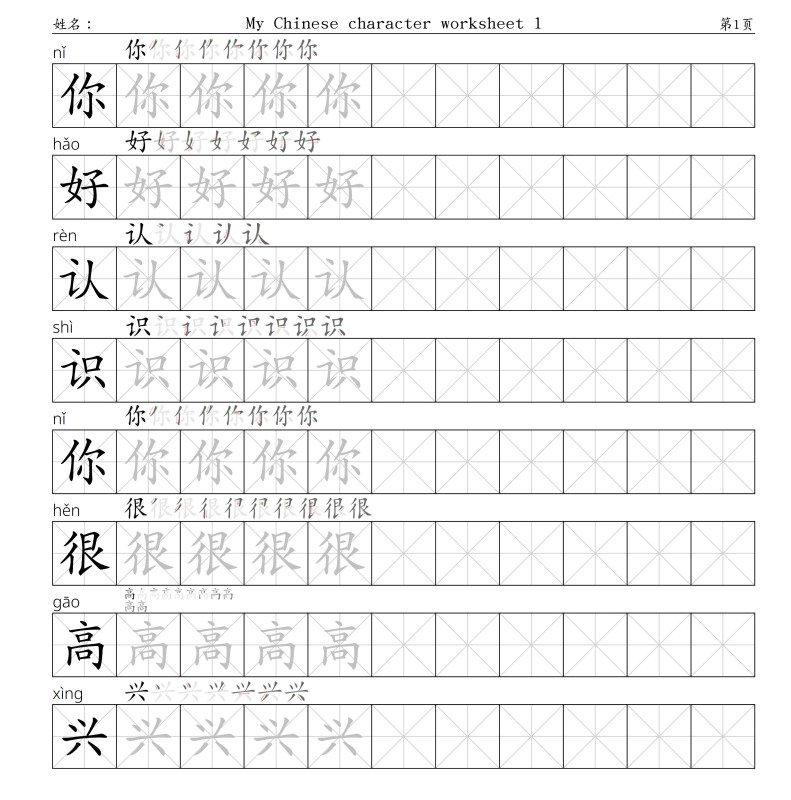
First of all, you’ll need paper, but not just any blank paper. If you’re a beginner or you feel that your handwriting needs a lot of work, your best bet is to use character practice sheets, which provide larger, pre-sectioned boxes for you to write in. Once you can write more precisely and feel comfortable with a smaller font, then it’s time to progress to the graph paper. Office supply stores often carry graph paper with boxes as big as 1 centimeter each, or as small as ¼ inch each.
When it comes to writing utensils, there’s a major debate on whether pens or pencils are ideal. While pencils are more convenient because you can erase mistakes and try again, many argue that pens encourage you to write more diligently because each mark is permanent. You only have one chance to get it right. Ultimately, the choice will come down to your personal preference or your teacher’s requirement.
Thankfully, these tools are all readily accessible, and you likely already have everything you need at home. Once you have your supplies in front of you, let’s look at some key practice strategies for your level.
Chinese Handwriting Practice for Beginner, Intermediate, And Advanced Learners
Beginners and advanced learners alike can benefit from deliberate handwriting practice. The key is to find strategies that will develop your fine motor skills while also deepening your understanding of the language.
Practice tips for beginner learners
The first step is to familiarize yourself with the basics. Be sure to check out our quick guide to Chinese character stroke order, as it will provide you with a clear map to follow. You may ask yourself why we need to bother with tedious things like stroke order. While it may feel quite foreign at first, with practice, you’ll find that writing Chinese characters is actually rather intuitive. The stroke order flows like a river, guiding you from each stroke to the next, and from each character to the next.
When it comes to selecting which characters to practice writing, you don’t need to overdo it. You can select a short list of words that contain all the elements you need to practice. As mentioned earlier, beginners can get ahead by focusing on pictographic characters and radicals.
For example, here is a list of 10 basic vocabulary words composed of the fundamental strokes that will no doubt come up countless times during your studies. Several of them, such as 人, 口, 日, and手, will also appear as radicals in other characters.
| 一 | (yī) | one |
| 人 | (rén) | person |
| 口 | (kǒu) | mouth |
| 手 | (shǒu) | hand |
| 大 | (dà) | big |
| 小 | (xiǎo) | small |
| 日 | (rì) | sun/day |
| 木 | (mù) | tree |
| 耳 | (ěr) | ear |
| 山 | (shān) | mountain |
If possible, ask a teacher, friend, or language exchange partner to look at your writing and provide feedback. One of the best methods is to have your tutor watch you as you write each character, so they can make sure you’re following the proper order and direction for each stroke. You’ll also be able to correct yourself immediately and try again if they spot an error.
This early stage is crucial because it’s quite easy to develop bad habits that will be much harder to break later on. A bit of additional effort at the beginning can save you a lot of trouble in the long run. Consider different resources you can use to practice:
- Chinese handwriting apps
- specialized character books
- writing-focused online courses – Comprehensive Guide to Chinese Characters.
Practice tips for intermediate learners
When you reach an intermediate stage, you’ll be required to write not only single-element characters, like the ones listed above, but also characters composed of multiple elements. This means paying additional attention to the proportions of each character and ensuring that your handwriting is balanced. While you may be tempted to switch to a smaller size of graph paper or stop using character practice sheets entirely, there are still benefits to writing larger. Start with a larger font, and as you gain confidence writing more complex characters, then begin to scale it down.
The intermediate stage is also when you can progress from intensive practice, focusing on being able to write a small set of characters perfectly, to extensive practice, focusing on being able to write a wide variety of characters well. Many learners find that they can recognize a lot more characters than they can write, and this is normal. Even native speakers sometimes have trouble recalling how to write certain characters, especially ones that come up rarely in everyday life.
When it comes to picking which characters to focus on, it’s logical to start with the characters that you’ll need to use most often, such as common nouns and verbs, grammar particles, and simple adjectives. These are the words that you’ll find on HSK vocabulary lists or Mandarin Chinese frequency lists below. From there, you can start to add words that are important to you specifically, such as terms from the industry you work in or words that are related to your hobbies and interests.
Beginners and intermediate learners should start writing Chinese characters systematically. Courses like the Zero to Hundred Characters Building-up Course help learners explore the characters, their creation, formation, and evolution into modern forms. In each lesson, learners break down characters, learn their origins, use common grammar patterns, and follow a stroke-by-stroke writing tutorial. This deepens your understanding of writing Chinese characters. If interested in writing Chinese characters, you can check the course for more details.
Practice tips for advanced learners
At the advanced stage, you’ve no doubt already become quite an autonomous learner, so this is where you can start to focus on your individual weaknesses and push yourself even further.
But how do you know where your weaknesses lie? Similar to beginners, seeking feedback from native speakers is paramount. The only difference is that you’ll likely need to ask them to look at a longer text written by you, as the errors may be few and far between. They may notice individual characters that need attention, or they may even pick up on larger patterns, such as frequently mixing up the line proportions for characters like 土(tǔ) and 士(shì).
The combination of integrating feedback and extensive practice is what will help you achieve mastery. One of the best ways to see your progress over time is to write every day, each time challenging yourself to write neatly at a steady pace. You can choose to write about a selected topic every day or keep a diary where you write about your daily life. Over time, you should feel your proficiency increasing, and when you look back at previous texts you wrote, you should see a visual difference in the quality of your writing as well.
If you’re already quite confident with your ability to write in standard print, you may want to begin challenging yourself in new ways. You can aim for accuracy by trying to write a 1,000-character text in pen with zero errors. You can also aim for speed, such as seeing how fast you can copy a text. If you want to test your recall abilities, try doing a dictation while listening to a complex piece of audio, such as from a podcast or news announcement.
Finally, the true way to take your Chinese handwriting to the next level is to study how native speakers write by hand, which can look quite different. They may take shortcuts, writing multiple strokes with a single continuous line or simplifying elements. This is how native speakers manage to write both fluidly and more quickly.
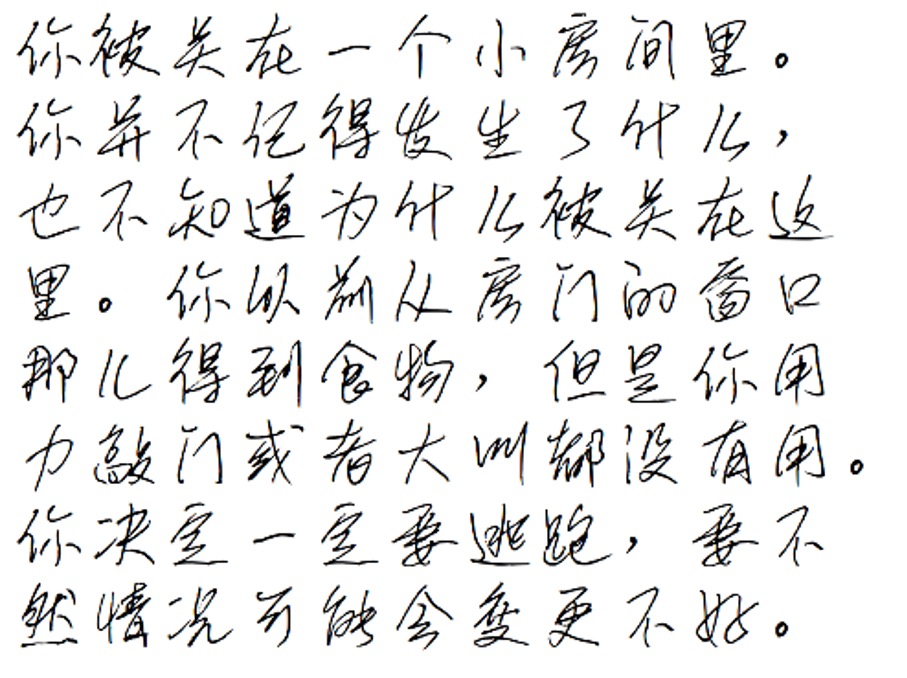
The fastest way to start writing like a native speaker is to imitate them. You can begin by watching others. There are many useful online resources, such as the Chinese Handwriting YouTube channel or the Chinese Handwriting community on Reddit, where you can see visual references or simple tutorials for writing in cursive script.
A Personal Note: Learning to write Chinese if you’re left-handed
If learning to write in Chinese is difficult for right-handed learners, it feels impossible for us lefties. As a young student, I was always the only left-handed person in my classes. I attended an American public school, where it’s no longer considered acceptable to force left-handed students to use their right hand to write. However, I could tell that my Chinese teachers weren’t quite sure how to teach me proper Chinese handwriting.
I’ll admit that I found it discouraging initially. Training my hand to follow stroke order was a unique challenge because I wanted to write all of my horizontal strokes from right to left, instead of left to right. I also noticed that all of my characters were slanted, a consequence of how I was holding the pencil in my hand. My teachers would stand behind me and look over my shoulder as I wrote, trying to see if I was “cheating” or not.
When I was about three months into my studies, my mid-term exam was coming up, and I felt depressed because I felt that I was doomed to lose points on the handwriting section. I had to sit down with myself and say, “This is more difficult for me than the other students, and it’s not fair, but that doesn’t mean I have to give up. It only means that I need to work harder.”
From that point on, I sat down every day and practiced intentionally. I focused on writing the strokes and characters that felt most unnatural for me. After about a week, I started to see a difference in the quality of my handwriting. After three weeks, my teacher was writing positive notes on my worksheets about the improvement she saw in my writing.
So, if you’re also a leftie and you want to know if you can still learn to write in Chinese, I’m living proof that if you put in the work, it will come. It will be harder for you, and it’s not fair. But the only thing standing in the way is your doubt.
A Final Word
If you’ve made it this far, I commend you! The world of the Chinese writing system is so vast, and yet we’ve only scratched the surface here. There are so many cultural and linguistic nuances to explore, many of which are completely new to English speakers. While we do not have the time to look at them all together, I hope that this article encourages you to embark on your own journey. I encourage you to use the strategies laid out here to both help strengthen your connection to the language and improve your fluency at the same time. Keep studying, stay curious, and open yourself up to all that the Chinese language has to offer.
Here is the list of the 150 commonly used Chinese characters that you need to master. Learn to practice your handwriting by downloading the common characters practice sheets.
| 150 Chinese Characters | Pinyin | Meaning | Example words |
| 的 | (de) | (possessive particle) | 我的 (wǒ de) mine |
| 一 | (yī) | one | 一个 (yí gè) one (item) |
| 是 | (shì) | is | 是的 (shì de) yes |
| 不 | (bù) | not | 不是 (bù shì) is not |
| 了 | (le) | (completed action marker) | 吃了 (chī le) ate |
| 人 | (rén) | person | 人们 (rén men) people |
| 我 | (wǒ) | I, me | 我们 (wǒ men) we, us |
| 在 | (zài) | at | 在家 (zài jiā) at home |
| 有 | (yǒu) | have | 有钱 (yǒu qián) wealthy |
| 他 | (tā) | he, him | 他们 (tā men) they, them (male or mixed gender) |
| 这 | (zhè) | this | 这里 (zhè lǐ) here |
| 个 | (gè) | (general measure word) | 个人 (gè rén) individual |
| 们 | (men) | (plural marker for pronouns) | 他们 (tā men) they, them |
| 中 | (zhōng) | middle, center | 中国 (Zhōngguó) China |
| 来 | (lái) | come | 来吧 (lái ba) come on |
| 上 | (shàng) | up | 上面 (shàngmiàn) above |
| 大 | (dà) | big | 大小 (dàxiǎo) size |
| 为 | (wèi) | for | 为了 (wèile) in order to |
| 和 | (hé) | and | 和平 (hépíng) peace |
| 国 | (guó) | country | 国家 (guójiā) country, nation |
| 地 | (de/dì) | (particle), ground | 地方 (dìfang) place |
| 到 | (dào) | to | 到了 (dào le) arrived |
| 以 | (yǐ) | with | 以内 (yǐnèi) within |
| 说 | (shuō) | say | 说话 (shuōhuà) speak |
| 时 | (shí) | time | 时间 (shíjiān) time |
| 要 | (yào) | Want | 需要 (xūyào) demand |
| 就 | (jiù) | then | 就是 (jiùshì) exactly |
| 出 | (chū) | out | 出去 (chūqù) go out |
| 会 | (huì) | be able to | 会议 (huìyì) meeting |
| 可 | (kě) | can | 可以 (kěyǐ) can, may |
| 子 | (zǐ) | child | 孩子 (háizi) child |
| 而 | (ér) | and | 而且 (érqiě)moreover |
| 那 | (nà) | that | 那里 (nà li) there |
| 得 | (dé) | obtain | 得到 (dédào) to obtain |
| 于 | (yú) | at | 于是 (yúshì) then |
| 开 | (kāi) | to open | 开始 (kāishǐ) to start |
| 好 | (hǎo) | good | 好吃 (hǎo chī) delicious |
| 话 | (huà) | word, speech | 电话 (diànhuà) telephone |
| 学 | (xué) | learn | 学校 (xuéxiào) school |
| 如 | (rú) | like, if | 如此 (rúcǐ) in this way |
| 都 | (dōu/dū) | all, city | 都市 (shì) city |
| 同 | (tóng) | same | 同学 (tóngxué) classmate |
| 现 | (xiàn) | now | 现在 (xiànzài) now |
| 当 | (dāng) | when | 当然 (dāngrán) of course |
| 没 | (méi) | not | 没有 (méiyǒu) do not have |
| 动 | (dòng) | move | 活动 (huódòng) activity |
| 情 | (qíng) | emotion, situation | 情况 (qíngkuàng) situation |
| 起 | (qǐ) | rise | 起床 (qǐchuáng) get up |
| 看 | (kàn) | see | 看书 (kàn shū) read a book |
| 定 | (dìng) | fix | 确定 (quèdìng) confirm |
| 天 | (tiān) | day | 天气 (tiānqì) weather |
| 分 | (fēn) | divide | 分钟 (fēnzhōng) minute |
| 红 | (hóng) | red | 红色 (hóngsè) red color |
| 进 | (jìn) | enter | 进入 (jìnrù) enter |
| 保 | (bǎo) | to protect, to ensure | 保护 (bǎohù) protection |
| 小 | (xiǎo) | small | 小时 (xiǎoshí) hour |
| 部 | (bù) | part | 部分 (bùfèn) part |
| 其 | (qí) | his, her | 其中 (qízhōng) among |
| 些 | (xiē) | some | 一些 (yīxiē) some |
| 主 | (zhǔ) | main | 主要 (zhǔyào) main |
| 事 | (shì) | thing, affair | 事情 (shìqing) matter, affair |
| 省 | (shěng) | province, to save | 省会 (shěnghuì) provincial capital |
| 什 | (shén) | what | 什么 (shénme) what |
| 义 | (yì) | meaning | 义务 (yìwù) duty, obligation |
| 各 | (gè) | each | 各种 (gèzhǒng) every kind of |
| 所 | (suǒ) | place | 所有 (suǒyǒu) all |
| 高 | (gāo) | high | 高度 (gāodù) height |
| 文 | (wén) | literature, culture | 文化 (wénhuà) culture |
| 作 | (zuò) | work | 作业 (zuòyè) homework |
| 方 | (fāng) | square, direction | 方法 (fāngfǎ) method |
| 成 | (chéng) | become | 成功 (chénggōng) success |
| 者 | (zhě) | person (suffix) | 作者 (zuòzhě) author |
| 但 | (dàn) | but | 但是 (dànshì) but |
| 考 | (kǎo) | to test, to examine | 考试 (kǎoshì) exam |
| 意 | (yì) | idea | 意思 (yìsi) meaning |
| 思 | (sī) | think | 思考 (sīkǎo) contemplate |
| 用 | (yòng) | use | 使用 (shǐyòng) to use |
| 类 | (lèi) | type, category | 类型 (lèixíng) type |
| 然 | (rán) | correct | 当然 (dāngrán) of course |
| 家 | (jiā) | home | 家庭 (jiātíng) family |
| 经 | (jīng) | pass through | 经济 (jīngjì) economy |
| 去 | (qù) | go | 去年 (qùnián) last year |
| 法 | (fǎ) | law, method | 法律 (fǎlǜ) law |
| 达 | (dá) | to reach | 达到 (dádào) to reach |
| 完 | (wán) | to finish, complete | 完成 (wánchéng) to complete |
| 道 | (dào) | way | 道路 (dàolù) road |
| 先 | (xiān) | first | 先生 (xiānsheng) Mr. |
| 发 | (fā) | send out | 发展 (fāzhǎn) develop |
| 老 | (lǎo) | old | 老人 (lǎorén) old person |
| 增 | (zēng) | to increase | 增加 (zēngjiā) to increase |
| 件 | (jiàn) | Item | 事件 (shìjiàn) event |
| 行 | (xíng) | to walk, to do | 行为 (xíngwéi) behavior |
| 过 | (guò) | to pass | 过程 (guòchéng) process |
| 性 | (xìng) | nature, sex | 性格 (xìnggé) personality |
| 女 | (nǚ) | female | 女人 (nǚrén) woman |
| 真 | (zhēn) | real | 真实 (zhēnshí) reality |
| 日 | (rì) | day, sun | 日记 (rìjì) diary |
| 加 | (jiā) | add | 增加 (zēngjiā) to increase |
| 让 | (ràng) | to let, allow | 让步 (ràngbù) to give in |
| 业 | (yè) | industry, business | 企业 (qǐyè) enterprise |
| 专 | (zhuān) | specialize | 专业 (zhuānyè) major, specialty |
| 十 | (shí) | ten | 十分 (shífēn) very |
| 东 | (dōng) | east | 东方 (dōngfāng) the East |
| 马 | (mǎ) | horse | 马上 (mǎshàng) immediately |
| 见 | (jiàn) | to see | 见面 (jiànmiàn) to meet up |
| 社 | (shè) | society | 社会 (shèhuì) society |
| 多 | (duō) | many | 多少 (duōshǎo) how many |
| 新 | (xīn) | new | 新闻 (xīnwén) news |
| 间 | (jiān) | between, room | 时间 (shíjiān) time |
| 环 | (huán) | ring, environment | 环境 (huánjìng) environment |
| 后 | (hòu) | behind, after | 以后 (yǐhòu) after |
| 少 | (shǎo) | few, little | 少年 (shàonián) youth |
| 理 | (lǐ) | reason | 理由 (lǐyóu) reason |
| 体 | (tǐ) | body | 体系 (tǐxì) system |
| 下 | (xià) | down | 下雨 (xiàyǔ) to rain |
| 机 | (jī) | machine, opportunity | 机会 (jīhuì) opportunity |
| 力 | (lì) | strength, effort | 力量 (lìliàng) strength |
| 门 | (mén) | door, branch of study | 门口 (ménkǒu) doorway |
| 任 | (rèn) | to appoint | 任何 (rènhé) any |
| 常 | (cháng) | often, normal | 常常 (chángcháng) often |
| 已 | (yǐ) | already | 已经 (yǐjīng) already |
| 应 | (yīng) | should | 应该 (yīnggāi) should |
| 面 | (miàn) | face, surface | 面对 (miànduì) to face |
| 很 | (hěn) | very | 很好 (hěn hǎo) very good |
| 生 | (shēng) | to give birth | 生活 (shēnghuó) life |
| 自 | (zì) | self | 自己 (zìjǐ) oneself |
| 心 | (xīn) | heart, mind | 心情 (xīnqíng) mood |
| 正 | (zhèng) | correct | 正确 (zhèngquè) correct |
| 还 | (hái/huán) | still, to return | 还原 (huányuán) to restore |
| 入 | (rù) | to enter | 进入 (jìnrù) to enter |
| 写 | (xiě) | to write | 写字 (xiězì) to write characters |
| 长 | (cháng/zhǎng) | long, grow | 长大 (cháng dà) to grow up |
| 知 | (zhī) | to know | 知识 (zhīshi) knowledge |
| 水 | (shuǐ) | water | 水果 (shuǐguǒ) fruit |
| 步 | (bù) | step | 步骤 (bùzhòu) step, measure |
| 安 | (ān) | peace, safe | 安全 (ānquán) safety |
| 问 | (wèn) | to ask | 问题 (wèntí) question |
| 光 | (guāng) | light | 阳光 (yángguāng) sunlight |
| 场 | (chǎng) | field | 市场 (shìchǎng) market |
| 目 | (mù) | eye,goal | 目标 (mùbiāo) target |
| 交 | (jiāo) | to hand over | 交流 (jiāoliú) to exchange |
| 表 | (biǎo) | table, to express | 表示 (biǎoshì) to express |
| 之 | (zhī) | of (literary) | 之间 (zhījiān) between |
| 员 | (yuán) | member | 员工 (yuángōng) staff, employee |
| 男 | (nán) | male | 男人 (nánrén) man |
| 养 | (yǎng) | to raise | 养成 (yǎngchéng) to cultivate |
| 对 | (duì) | correct, to | 对话 (duìhuà) dialogue |
| 能 | (néng) | can, to be able to | 能力 (nénglì) ability |
| 谢 | (xiè) | thanks | 谢谢 (xièxie) thanks |
| 与 | (yǔ) | and, with | 与其 (yǔqí) rather than |

Leave a Reply
You must be logged in to post a comment.