Nyingchi Travel Guide: Visit Tibet’s Forested Highlands
Nyingchi Travel Guide: Visit Tibet’s Forested Highlands
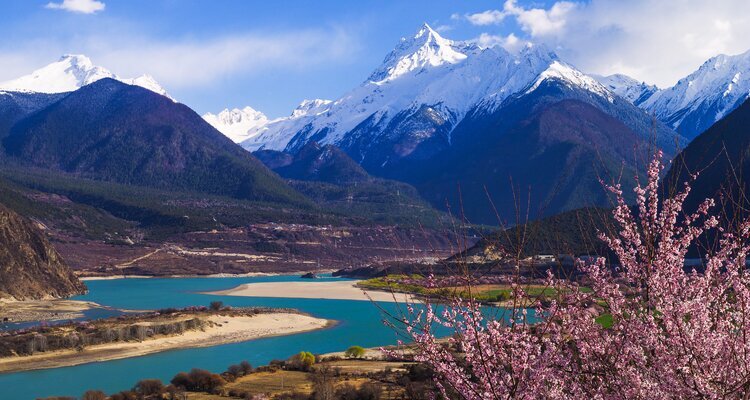
Nyingchi (林芝, also known as Nyingtri or Linzhi) sits at just 2,900–3,100 meters above sea level—about 600 meters lower than Lhasa. It is the second busiest tourist city in Tibet.
Known as the “Switzerland of Tibet”, Nyingchi is well worth a short stay for two or more days to explore the natural wonders of eastern Tibet, such as the Lulang Forest, Basum Tso Lake, Laigu Glacier, and so on. And the Nyingchi Peach Blossom Festival, held every spring, shows the romantic side of Tibetan scenery.
However, foreign visitors cannot explore Tibet independently. You must book through a licensed travel agency and be accompanied by a local guide. In this guide, we’ll walk you through everything you need to plan a comfortable Nyingchi tour.
 Nyingchi
Content Preview
- How to Get to Nyingchi
- What to Do in Nyingchi
- How Many Days to Spend in Nyingchi
- When to Visit Nyingchi
- Where to Stay in Nyingchi
- What Documents Do I Need for Visiting Nyingchi?
- Altitude and Acclimatization
- What to Pack
How to Get to Nyingchi
Although Nyingchi has direct flights from cities such as Chengdu, Chongqing, and Beijing, we generally recommend flying to Lhasa first and then continuing to Nyingchi.
This is mainly because Nyingchi Mainling Airport is located in very complex terrain. Flights there are often affected by weather conditions. Delays or cancellations are quite common, especially when the weather is unstable. Flying into Lhasa first is usually a much more reliable option.
From Lhasa to Nyingchi, you can travel by plane (about 1 hour), high-speed train (around 3.5 hours), or by car (approximately 5–6 hours).
Among these options, we especially recommend traveling by car. While it takes longer, the journey itself is part of the experience, passing by must-see highlights such as Basomtso Lake.
Our vehicles and guides all depart from Lhasa, and we can pick you up directly from your hotel and drive you straight to your next destination. The drive is comfortable, and with a private vehicle and guide, the pace can be fully adjusted to match your travel style and energy level.
What to See in Nyingchi
Nyingchi offers beautiful landscapes throughout the year. Instead of barren plateaus, you’ll be surrounded by dense forests, turquoise lakes, and snow-capped peaks rising above green valleys.
Here are the highlights you shouldn’t miss.
Bomi Peach Blossom Valley in Spring
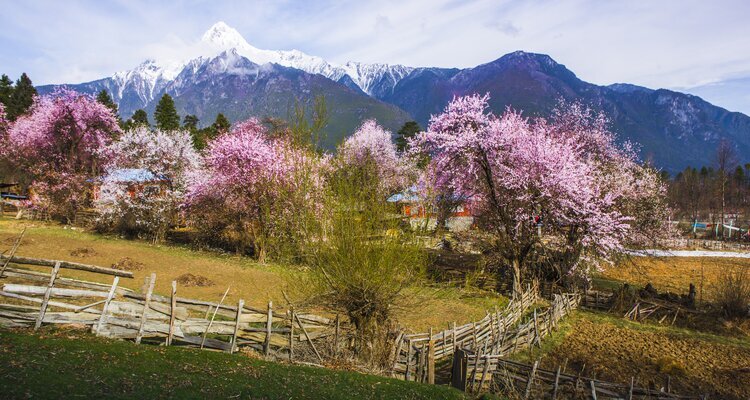
Bomi Peach Blossom Valley is a must-visit during the peach blossom season (late March to early April). Even though you can find white and pink peach blossoms almost everywhere around Nyingchi and Bome, for the most spectacular sea of flowers, we suggest heading to Bomi Peach Blossom Valley. This is China’s largest peach-blossom valley and has the densest displays.
You will also find Tibetan houses and golden rapeseed flowers spotted on the ground. Snowy mountains in the background make the pink and white flowers feel even more striking. Unlike cultivated orchards, these are wild peach trees that have grown here for centuries, giving the landscape a natural, untamed beauty.
 Peach blossoms in Nyingchi
During peach blossom season, you can experience the Nyingchi Peach Blossom Festival, which is held in places like Bomi County and Gala Village. Besides wandering through endless peach fields, you can enjoy Tibetan folk music, costume parades, and archery and horse-racing contests, as well as food fairs featuring local specialties.
Mount Namcha Barwa
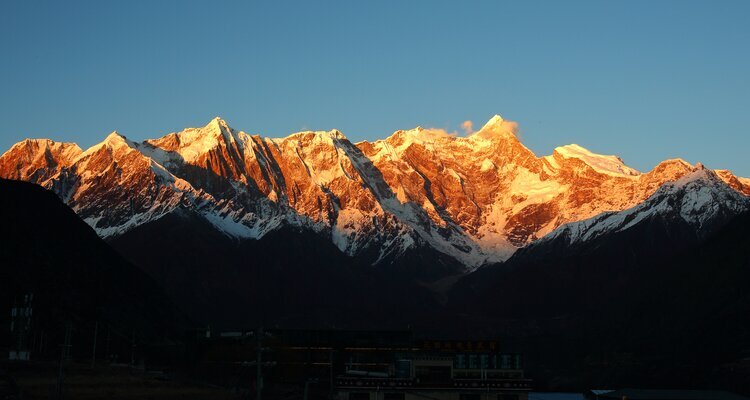
Mount Namcha Barwa is considered one of the most beautiful mountains in China, especially famous for its breathtaking Sunlit Golden Mountain spectacle. As the sun begins to set, the snow-covered summit gradually glows gold and then soft pink, standing in striking contrast against the darkening sky.
 Sunlit Golden Mountain
What makes this moment even more special is how rare it is. Namcha Barwa is shrouded in clouds and mist for much of the year, and there are only about 100 days in a year that the mountain will fully reveal its sharp peaks. You’ll most likely see the Sunlit Golden Mountain spectacle during late autumn and winter (October-February).
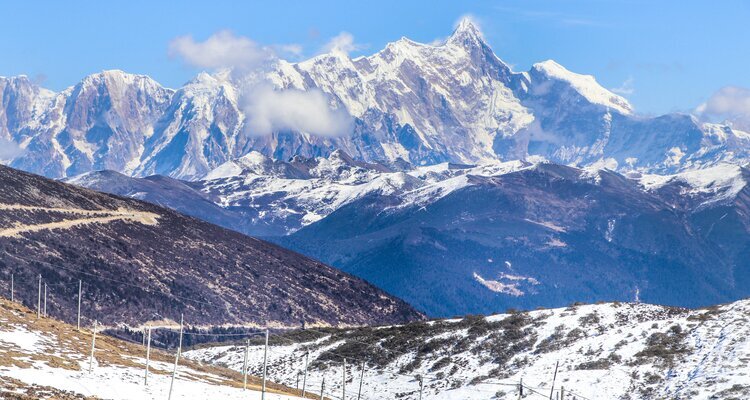
During your trip in Nyingchi, you’ll pass the best viewpoints—Sejila Pass (4,728 m / 15,512 ft)—on the drive from Nyingchi to Bome. The wide-open view here allows you to capture the majestic Namcha Barwa peak framed with fluttering prayer flags. You can photograph the full view of the Moun Namcha Barwa here on clear days.
 Sejila Pass
Basum Tso Lake
Basum Tso is one of Tibet’s most beautiful alpine lakes, sitting at about 3,700 meters above sea level. What makes it special is how close the mountains feel, with forests wrapping all the way around the turquoise lake. The water is so clear that you can see fish swimming beneath the surface.
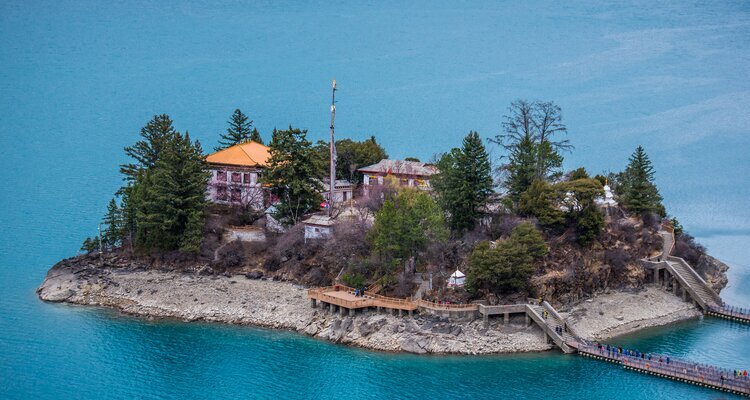 Basum Tso Lake
The small island in the middle of the lake is a popular spot for photos, but the real beauty lies deeper in the valley. With a private car, you can reach Xincuo, a quieter area where few visitors go. Here, you can walk along the lakeshore, surrounded by untouched nature, and see herds of yaks move slowly across the stony beach.
The drive to Basum Tso from Lhasa takes about 5 hours, and it’s a perfect stop on your way to Nyingchi.
Lulang Forest
Lulang, which is called “a place that makes you forget to go home” in Tibet, lives up to its name. You can experience the tranquil pastoral scenery here. The lush valley is filled with alpine meadows, wildflowers, grazing yaks, and traditional Tibetan houses, all set against a backdrop of snow-capped peaks.
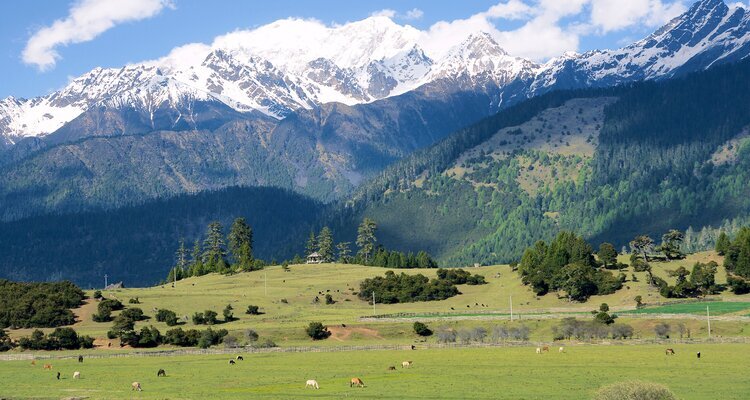 Lulang Forest
The forest is particularly stunning in late spring and early summer (May–June), and you can find rhododendrons blooming across the hillsides. If you like beautiful autumn colors, come to Nyingchi from September to November. The trees turn golden, creating a warm contrast with the white mountains beyond.
Lulang is also famous for its stone pot chicken, a local specialty cooked with wild mushrooms and herbs. You can stop here for lunch while traveling between Lhasa and Nyingchi.
Laigu Glacier
If you’re visiting between late December and early February, don’t miss Laigu Glacier near Bomi. This massive glacier system is one of the most beautiful in Tibet, and in winter, the ice takes on a stunning, clear blue color that rivals anything you’d see in Iceland or Patagonia.
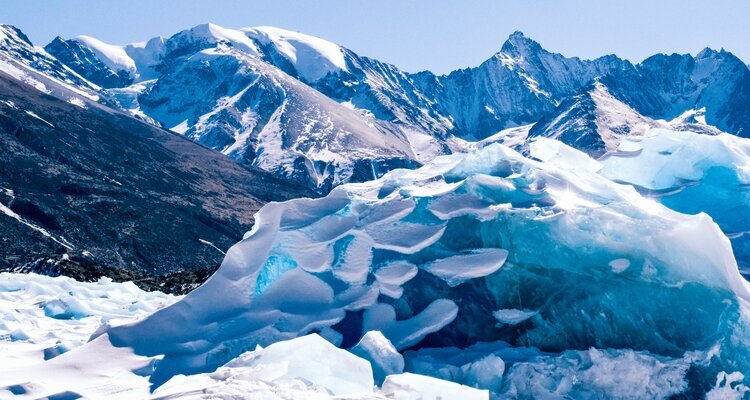 Laigu Glacier
You can only see the blue ice in winter, and there will be chunks of blue ice standing on the frozen Rawok Lake. You will need a moderate trek to reach the glacier tongue and see the massive ice blocks glow in shades of deep blue. With our experienced local guide, you can even step inside the blue ice caves and capture photos that feel almost unreal.
How Many Days to Spend in Nyingchi
For most first-time visitors, 3–4 days in Nyingchi is ideal. This gives you enough time to explore the main attractions without feeling rushed.
Suggested itinerary:
Day 1: Lhasa to Nyingchi via Basum Tso Lake and Gala Village
Day 2: Nyingchi to Bomi, visit Lulang Forest and Tibetan village
Day 3: Bomi to Nyingchi—pristine forests and Mount Namcha Barwa viewpoints
Optional Day 4: Extra day in Bome for Laigu Glacier in winter (December–February) or peach blossom valleys in spring (late March to mid-April)
Combining Nyingchi with Lhasa
The most popular option is a 7-day itinerary combining Lhasa, Nyingchi, and Bomi:
Days 1–3: Lhasa (Potala Palace, Jokhang Temple, Sera Monastery, acclimatization)
Days 4–6: Nyingchi and Bomi (natural landscapes, glaciers, or blossoms depending on season)
Day 7: Depart Nyingchi
This combination balances Tibet’s cultural heart in Lhasa with Nyingchi’s dramatic natural beauty. You can see our 7-Day Lhasa, Nyingchi, and Bome Tour for more details.
When to Visit Nyingchi
| Time | Best for | Temp. | Travel Tips |
|---|---|---|---|
| Spring(March–May) | Peach blossoms | 5℃ to 18℃ / 41℉ to 64℉ | Peak season, book early |
| Summer(June–August) | Lush forest and rhododendrons | 12℃ to 22℃ / 54℉ to 72℉ | Rainy season, less recommended |
| Autumn(September–November) | Autumn color and clear weather | 3℃ to 16℃ / 37℉ to 61℉ | Good for hiking and photography |
| Winter(December–February) | Blue ice glacier and mountain view | -5℃ to 8℃ / 23℉ to 46℉ | Lowest season |
You can experience different seasonal scenery whenever you visit Nyingchi. For more personal advice, I prefer Spring for the most popular and classic scenery of peach blossoms.
Late March–April (Peach Blossom Season): 5℃ to 18℃ / 41℉ to 64℉
Peak peach blossom season transforms valleys into pink and white landscapes against snow-covered peaks. This is the most romantic spring scenery in Tibet. Book your tickets and hotels at least 2 months earlier, as this is the busiest season in Nyingchi.
September–November (Autumn): 3℃ to 16℃ / 37℉ to 61℉
Forests turn golden and red, and skies are crisp and clear. This is one of the best times for mountain views. Mount Namcha Barwa is more likely to appear without clouds. Stable weather is for hiking and photography. Temperatures drop in November, so pack warm layers.
December–February (Winter): -5℃ to 8℃ / 23℉ to 46℉
Laigu Glacier displays beautiful blue ice, and mountain visibility is at its peak with dry, clear air. This is the quietest season with fewer tourists.
Temperatures are cold, you need to bring serious winter gear if visiting glaciers.
Less Recommended: June–August (Summer): 12℃ to 22℃ / 54℉ to 72℉
For the best experience, we suggest avoiding this rainy season. While June brings rhododendrons and July–August offer lush forests and are ideal for escaping heat elsewhere in China, clear days are rare. June averages 18 rainy days, July 20 days, and August 19 days. If you visit during the summer, expect rain most of the time, which limits mountain views and outdoor activities.
Where to Stay in Nyingchi
Nyingchi is one of Tibet’s most popular travel destinations, offering a good range of accommodation options. Bayi District has the most star-rated hotels; if you prefer a more relaxed countryside atmosphere and unique Tibetan-style boutique hotels, you can stay in Lulang Town. Bomi is rather smaller with limited accommodation choices.
Bayi District: Main District with More Choices
Bayi District is Nyingchi’s main hub and the most convenient base for exploring the region. It has the widest selection of hotels, along with restaurants, shops, and other amenities.
Recommend Hotels:
- Nyingchi Joy Crown Resort Hotel ***** (林芝悦皇冠度假酒店): it offers comfortable environment, direct views of Mount Biri and an excellent breakfast spread.
- Nyingchi Chomura Zong UrCove Hotel **** (林芝乔穆朗宗逸扉酒店): modern facilities with smart room controls, humidifiers, and oxygen supply systems. You can open your window to views of snow-capped mountains and the Niyang River.
Lulang Town: Resort Area
Lulang is a smaller mountain town surrounded by forests and alpine meadows, about 2 hours from Bayi District. If you prefer a quieter, more pastoral setting with fresh mountain air, Lulang is the ideal choice.
Recommend Hotels:
- Nyingchi Evergrande Hotel *****(林芝恒大酒店): beautiful garden, Tibetan-style buildings and rooms.
- Nyingchi Artel Poly ***** (林芝保利雅途酒店): quiet and elegant environment, Tibetan-style rooms, mountain and lake views.
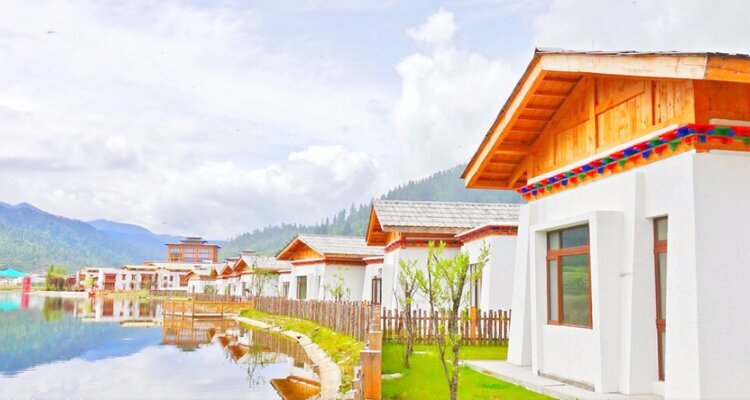 Nyingchi Artel Poly
Bomi County: Stay for Peach Blossoms or Glacier
Bomi is a smaller town surrounded by forests and mountains, about 4 hours by road from Bayi District. If your itinerary includes Laigu Glacier or extended time in the peach blossom valleys, you’ll likely stay here for a night or two. Hotels in Bomi are simpler than those in Bayi District.
Recommended Hotels:
- Bomi Hengxin Zangwang Hotel ****(波密恒鑫藏王大酒店): high value for money, river and mountain view.
- Bomi Shanxia Hotel ****(波密山峡大酒店): smart room controls, clean and modern rooms.
What Documents Do I Need for Visiting Nyingchi?
To visit Nyingchi, the most important document is the Tibet Travel Permit (also called the Tibet Entry Permit), which all foreign passport holders must obtain before entering Tibet.
To apply for the Tibet Travel Permit, you’ll need a valid passport (with at least 6 months’ validity) and a valid Chinese visa. Additional permits are also needed if you want to visit restricted areas near the border (will be handled by us).
There’s no need to worry about handling the paperwork yourself. Travel with us, and we will arrange all necessary permits once you provide a copy of your passport and Chinese visa. The processing time is typically 8–9 working days, so we recommend booking your tour at least 10 days in advance.
Altitude and Acclimatization
Nyingchi’s lower altitude (2,900–3,100 meters) makes it one of the easiest places in Tibet for first-time visitors. At about 600 meters lower than Lhasa (3,650 meters), most people experience little to no altitude sickness here, especially if you’ve spent a few days in Lhasa first.
However, some areas—like Laigu Glacier and mountain passes—reach 4,000 meters or higher. Take it slow when hiking or walking at higher elevations, and stay hydrated. If you feel lightheaded or short of breath, rest and descend if needed.
What to Pack
Clothing: Nyingchi’s weather can change quickly, so bring layers. A warm fleece or down jacket for mornings and evenings, lighter clothes for midday, and an umbrella or a waterproof jacket in case of rain. In winter, pack serious cold-weather gear, especially if visiting Laigu Glacier.
Sun protection: Even on cloudy days, UV radiation is strong at high altitude. Bring sunscreen, sunglasses, and a hat.
Comfortable shoes: You’ll do some walking on uneven trails and around scenic areas. Sturdy, comfortable shoes with a good grip are essential.
Visit Nyingchi with Us
Planning a trip to Tibet can feel overwhelming—permits, guides, transportation, and itinerary planning all require local expertise. That’s where we come in. Contact us to start your trip, or check our popular Tibet tours:

Leave a Reply
You must be logged in to post a comment.