7 Popular Types of Chinese Liquor: Mijiu to Baijiu
7 Popular Types of Chinese Liquor: Mijiu to Baijiu
Interested in learning about the top 7 types of Chinese liquor? This guide covers the most popular Chinese alcoholic beverages, from mijiu and huangjiu to baijiu and kumis.
Mǐjiǔ is a traditional Chinese alcoholic beverage made by the fermentation of rice starch, which has been converted to sugars. Technically, it’s not “wine” – because it’s not made from sweet grapes and other fruit. So, you can refer to it as rice liquor if you like.
2. Huangjiu, Mulled Rice Wine
黄酒
huángjiǔ
huangjiu; mulled rice wine
(lit. “yellow wine”)
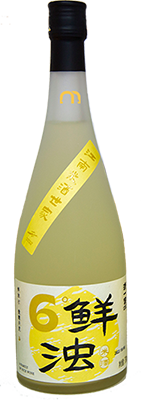
Huángjiǔ is a type of traditional Chinese liquor brewed by mixing boiled grains such as rice, glutinous rice, or millet. Since it’s not distilled, its alcohol content is lower compared to báijiǔ.
白酒
báijiǔ
baijiu
(lit. “white wine”)
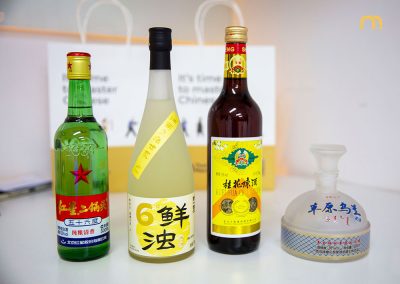
Báijiǔ is a Chinese liquor made from sorghum, with a strong, spicy flavor and nutty undertones. Known as “white wine”, it’s a key part of Chinese drinking culture. Moutai and Wuliangye are famous Baijiu brands.
二锅头
èrguōtóu
erguotou, sorghum liquor
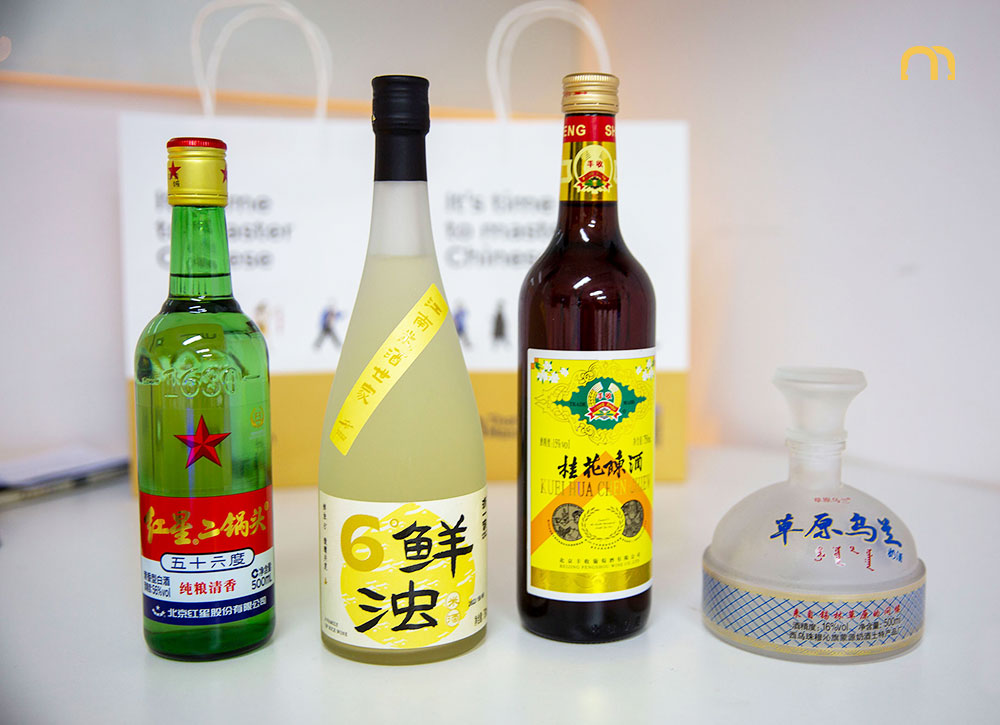
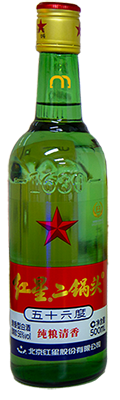
Èrguōtóu is a traditional Chinese liquor from Beijing, a type of light-aroma báijiǔ made from sorghum. The name “èrguōtóu” means “second distillation,” which refers to its level of purity. It takes six months to produce this high-alcohol-content liquor (56%). Erguotou has a distinct spicy flavor and is widely enjoyed in Chinese drinking culture.
马奶酒
mǎnǎijiǔ
kumis
(lit. “horse milk wine”)
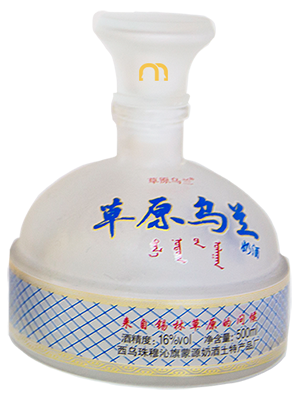
Mǎnǎijiǔ, or kumis, is a traditional Chinese alcoholic beverage made from fermented mare’s milk. With an alcohol content of around 16%, it has a mildly sour taste and a creamy, milky flavor. Kumis is known for its role in Mongolian and Chinese cultures and is often consumed as a probiotic drink due to its fermentation process.
桂花酒
guìhuājiǔ
osmanthus-scented wine
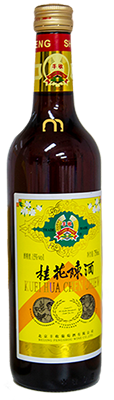
Guìhuājiǔ, or osmanthus-scented wine, is a Chinese alcoholic beverage made from weak baijiu and flavored with sweet osmanthus flowers. It is often sweetened to enhance its mildly sweet and flowery flavor. This drink is popular for its aromatic taste and is widely enjoyed in Chinese regional cuisines.
Of course, this list can go on and on! There are more regional types of 酒, such as osmanthus-scented wine and Tibetan highland barley wine, as well as variations within each category.
‘Milder’ and More Universal Drinks
6. Beer
Píjiǔ is a popular Chinese beer made from barley, hops, and water, brewed to create a refreshing and mildly bitter taste. Beer is widely consumed across China, and both domestic brands like Tsingtao and international beer brands are available in markets throughout the country.
Pútáojiǔ, or Chinese wine, is made from fermented grapes and is gaining popularity across China. With a growing interest in wine culture, both local wine brands and international wines are widely enjoyed by Chinese consumers. From red wine to white wine, Chinese wine offers a variety of flavors to pair with traditional Chinese dishes.
Further Reading
Interested to know more about Chinese wine culture, how to drink the drinks mentioned in this post “the local way”, and learn about the history of alcohol in China? Then don’t miss our previous post about it:
Chinese Drinking Culture 101
← 5 Most Common Ways to Say Hello in ChineseChinese Table Manners & Etiquette: Key Dining Tips | That’s Mandarin →
7 Popular Types of Chinese Liquor: Mijiu to Baijiu
Interested in learning about the top 7 types of Chinese liquor? This guide covers the most popular Chinese alcoholic beverages, from mijiu and huangjiu to baijiu and kumis.
Mǐjiǔ is a traditional Chinese alcoholic beverage made by the fermentation of rice starch, which has been converted to sugars. Technically, it’s not “wine” – because it’s not made from sweet grapes and other fruit. So, you can refer to it as rice liquor if you like.
2. Huangjiu, Mulled Rice Wine
huángjiǔ
huangjiu; mulled rice wine
(lit. “yellow wine”)
Huángjiǔ is a type of traditional Chinese liquor brewed by mixing boiled grains such as rice, glutinous rice, or millet. Since it’s not distilled, its alcohol content is lower compared to báijiǔ.
báijiǔ
baijiu
(lit. “white wine”)
Báijiǔ is a Chinese liquor made from sorghum, with a strong, spicy flavor and nutty undertones. Known as “white wine”, it’s a key part of Chinese drinking culture. Moutai and Wuliangye are famous Baijiu brands.
èrguōtóu
erguotou, sorghum liquor
Èrguōtóu is a traditional Chinese liquor from Beijing, a type of light-aroma báijiǔ made from sorghum. The name “èrguōtóu” means “second distillation,” which refers to its level of purity. It takes six months to produce this high-alcohol-content liquor (56%). Erguotou has a distinct spicy flavor and is widely enjoyed in Chinese drinking culture.
mǎnǎijiǔ
kumis
(lit. “horse milk wine”)
Mǎnǎijiǔ, or kumis, is a traditional Chinese alcoholic beverage made from fermented mare’s milk. With an alcohol content of around 16%, it has a mildly sour taste and a creamy, milky flavor. Kumis is known for its role in Mongolian and Chinese cultures and is often consumed as a probiotic drink due to its fermentation process.
Guìhuājiǔ, or osmanthus-scented wine, is a Chinese alcoholic beverage made from weak baijiu and flavored with sweet osmanthus flowers. It is often sweetened to enhance its mildly sweet and flowery flavor. This drink is popular for its aromatic taste and is widely enjoyed in Chinese regional cuisines.
Of course, this list can go on and on! There are more regional types of 酒, such as osmanthus-scented wine and Tibetan highland barley wine, as well as variations within each category.
‘Milder’ and More Universal Drinks
Píjiǔ is a popular Chinese beer made from barley, hops, and water, brewed to create a refreshing and mildly bitter taste. Beer is widely consumed across China, and both domestic brands like Tsingtao and international beer brands are available in markets throughout the country.
Pútáojiǔ, or Chinese wine, is made from fermented grapes and is gaining popularity across China. With a growing interest in wine culture, both local wine brands and international wines are widely enjoyed by Chinese consumers. From red wine to white wine, Chinese wine offers a variety of flavors to pair with traditional Chinese dishes.
Interested to know more about Chinese wine culture, how to drink the drinks mentioned in this post “the local way”, and learn about the history of alcohol in China? Then don’t miss our previous post about it:
March 13 | Making Chinese Dumplings
Chinese Table Manners & Etiquette: Key Dining Tips | That’s Mandarin
7 Popular Types of Chinese Liquor: Mijiu to Baijiu
5 Most Common Ways to Say Hello in Chinese
Get a Free Trial Chinese Class
with That’s Mandarin online
黄酒
huángjiǔ
huangjiu; mulled rice wine
(lit. “yellow wine”)
白酒
báijiǔ
baijiu
(lit. “white wine”)
二锅头
èrguōtóu
erguotou, sorghum liquor
马奶酒
mǎnǎijiǔ
kumis
(lit. “horse milk wine”)
桂花酒
guìhuājiǔ
osmanthus-scented wine
‘Milder’ and More Universal Drinks
6. Beer
Further Reading
Interested to know more about Chinese wine culture, how to drink the drinks mentioned in this post “the local way”, and learn about the history of alcohol in China? Then don’t miss our previous post about it:
Chinese Drinking Culture 101
Get a Free Trial Chinese Class
with That’s Mandarin online






Leave a Reply
You must be logged in to post a comment.