A Thematic Learning Approach – Exploring Body-Related Chinese Characters
A Thematic Learning Approach – Exploring Body-Related Chinese Characters
Learning Chinese characters can be challenging due to the complexity and diversity of the symbols. One effective approach is the topic-oriented characters learning method, which focuses on specific themes to make the process more efficient and engaging.
As in many other languages, Chinese has multiple words that each have multiple meanings, also known as polysemy. These polysemantic words convey several concepts at once and can mean one of many things at the same time. One common example is 面(miàn), which means “side”, “surface” or “face”.
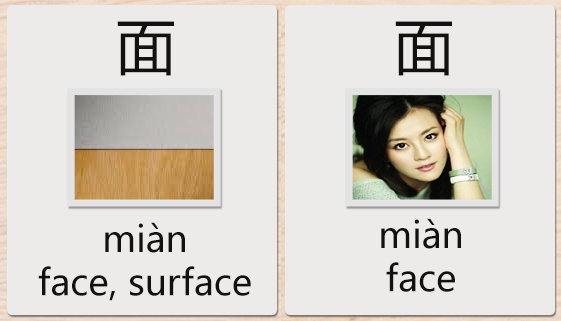

Bodily Characters in Chinese
面(miàn) is not the only important Chinese character related to the body. What’s fascinating about these bodily characters is that their pictographs often closely resemble what they represent.
For example, look at the word 口(kǒu). Similarly, the ancient written form of 耳(ěr) looks like a human ear, and that of 足(zú) resembles a foot. It is commonly thought that 手(shǒu) is written to resemble the shape of a hand with five fingers. However, remember not to confuse 手 (shǒu) with 毛 (máo), which was designed to resemble a feather.
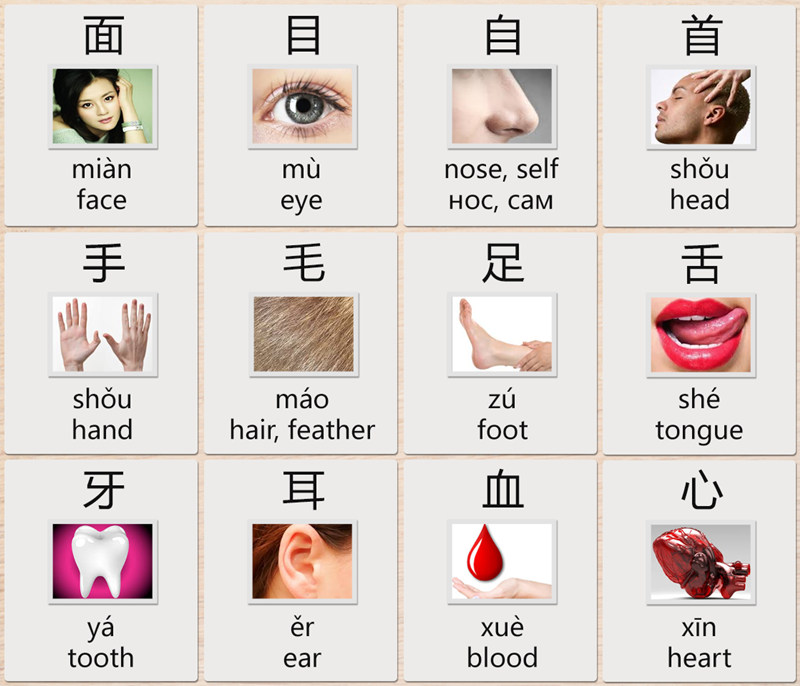
Visual Representation in Characters
目(mù) looks like a human eye on its side, with its left end at the top and the right end at the bottom. While it is not used as a standalone word today, it remains a crucial part of some important Chinese words, such as:
- 目光 (mù guāng) – vision, sight, view
- 目标 (mù biāo) – target
Beginners often confuse 目(mù) with 自(zì), which refers to one’s “nose”. The character 自 (zì) was derived from the resemblance of a human nose, but its meaning extended over time to also refer to one’s “self.” This may be because when speaking about oneself, people often point to their nose. 自 (zì) is part of the commonly used word 自己 (zì jǐ) – oneself, one’s own.
Another character not to be confused with 目 (mù) and 自 (zì) is 首 (shǒu), which is written to resemble the shape of a human head.
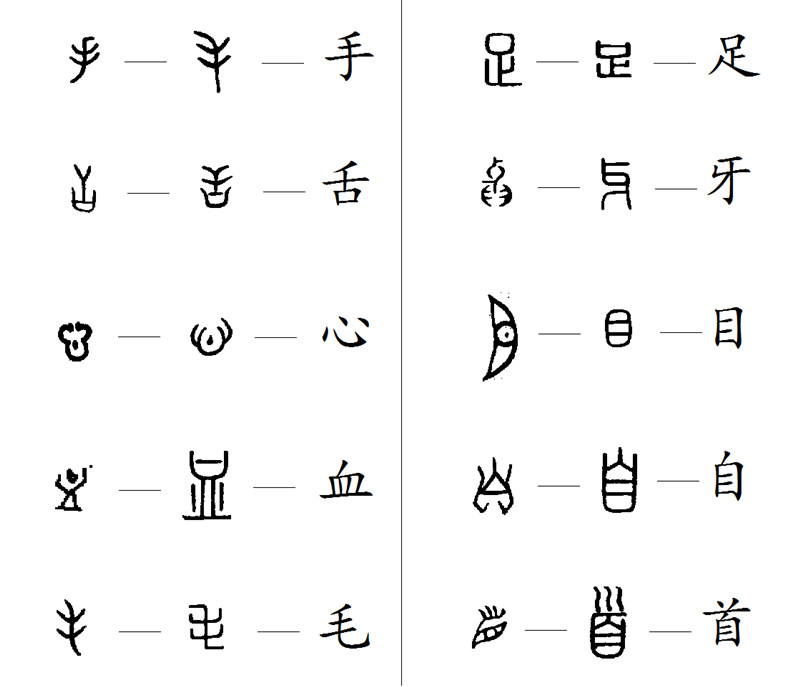
Significance of 心 and 血
The character 心 (xīn), representing the heart, was probably not a recognizable object in ancient times. It is most likely a pictograph that originally referred to the entire torso, understood to contain the heart. Meanwhile, 血 (xuè), meaning blood, is likely a pictograph depicting a basin of sacrificial blood.
Memorizing these symbols is crucial for further study of Chinese, as many of them are used as radicals in compound characters. By understanding the origins and representations of these characters, you can gain deeper insights into the Chinese language and its rich cultural heritage.
Share your learning experience with us!

Leave a Reply
You must be logged in to post a comment.